
Asian hair and the low taper fade were basically made for each other. The thick, straight strands hold a crisp fade line better than most hair types, and the longer top gives you endless room to style.
Whether you want something sharp for the office or a little wild for weekends, this guide breaks down everything you need to know before your next barber appointment.
Below, you’ll find what a low taper fade actually is, why it suits Asian hair so well, the top styles trending in 2026, and exactly how to describe the cut to your barber so you never leave the chair disappointed.
What Is a Low Taper Fade Asian Hair Haircut?
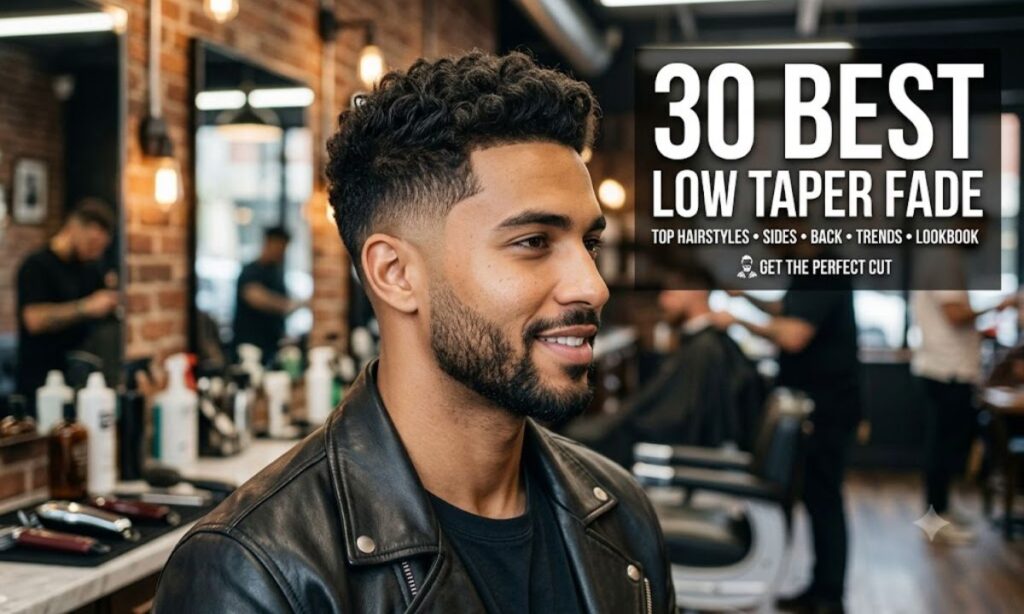
A low taper fade Asian hair haircut is a style where the hair fades gradually starting just above the ears and around the neckline, while the top stays noticeably longer. The result is a soft, natural transition instead of a harsh line — clean on the sides, expressive on top.
What Is a Low Taper Fade?

In simple terms, a taper fade shortens hair gradually from top to bottom. A low taper fade keeps that fade close to the hairline, meaning the sides and back stay fuller for longer compared to a mid or high fade. It’s the most subtle version of a fade haircut, which is exactly why it works for formal settings as well as casual ones.
Here’s a quick way to see how it compares to other fade heights:
| Fade Type | Where It Starts | Best For |
| Low Taper Fade | Just above the ears/neckline | Office jobs, first fades, subtle look |
| Mid Taper Fade | Above the temple | More noticeable contrast, versatile |
| High Taper Fade | Near the top of the head | Bold, edgy, high-maintenance style |
Why Asian Hair Works Well with a Low Taper Fade
Asian hair is typically thick, straight, and smooth in texture. Those three qualities are a barber’s dream when it comes to fades:
- Thickness helps the top hold volume and shape without needing extra product
- Straightness creates a sharp, defined fade line that photographs well
- Smooth texture makes styling — slick backs, textured crops, side parts — much easier to hold
Because of this natural texture, the low taper fade blends into almost any hairstyle on top, from a messy fringe to a fully slicked-back look.
Why This Haircut Is Popular in 2026

The low taper fade has held its spot as one of the most requested Asian men’s haircuts for a simple reason: it’s low-maintenance but never looks boring. It suits students, athletes, and professionals alike, and it grows out gracefully instead of looking messy after two or three weeks — something high fades can’t always claim.
It also plays well with current trends like textured fringes, two-block cuts, and soft middle parts, which keeps the style feeling fresh rather than dated.
30 Best Low Taper Fade Asian Haircut Styles
Here are the top style categories barbers are seeing the most requests for this year, grouped so you can quickly find your match.
1. Textured Crop with Low Taper
Short, choppy layers on top paired with a subtle fade. Low effort, high payoff — just apply a matte clay and go.
2. Two-Block Haircut
A Korean-inspired classic: a noticeably longer top sits over a much shorter, faded undercut. Great for volume and a modern silhouette.
3. Middle Part with Low Taper
Popular in K-pop-inspired looks, this style pushes hair away from the center for a soft, symmetrical frame around the face.
4. Side Part Low Taper Fade
A timeless, professional option. Works especially well for job interviews or formal events.
5. Slicked-Back Low Taper
Hair is brushed straight back for a sleek, structured finish — ideal for straight Asian hair that holds a slick style easily.
6. Messy Fringe Fade
A relaxed, tousled fringe on top paired with a clean low fade underneath. Casual but never sloppy.
7. Comma Hair (Korean Comma Cut)
Named for the curved, comma-shaped fringe that sweeps gently across the forehead. Soft, boyish, and low-maintenance.
8. Blowout Taper
The top is blown out for extra height and volume before styling — a favorite for thick, straight hair types.
9. Textured Fringe Low Taper
Choppy, piece-y fringe paired with a soft fade. A go-to for a laid-back, youthful look.
10. Edgar Haircut with Low Fade
Defined by a straight-across fringe and sharp lines, this style has become a modern staple among younger Asian men.
Other trending variations worth asking your barber about:
- Low taper fade with a curly or wavy top
- Low taper fade mullet
- Low taper fade with a light beard pairing
- Low taper fade + quiff
- Low taper fade with subtle highlights
- Low taper fade buzz cut
- Low taper fade with a soft pompadour
- Low taper fade comb-over
- Low taper fade with a hard part line
- Low taper fade for straight, fine hair
- Low taper fade with brushed-up texture
- Low taper fade + short beard combo
- Low taper fade with natural fringe
- Low taper fade for round face shapes
- Low taper fade for square face shapes
- Low taper fade with ash-brown color
- Low taper fade with soft golden tones
- Low taper fade + textured spikes
- Low taper fade with a low volume crop
- Low taper fade for oval face shapes
Each of these can be adjusted for hair density, face shape, and how much daily styling time you’re willing to put in.
Choosing the Right Low Taper Fade Style for You
Not every version of this haircut suits every face or hair type. A few quick guidelines:
- Round face → styles with height on top (blowout taper, quiff) help elongate the face
- Square face → softer, textured fringes balance out strong jawlines
- Oval face → almost any style works, including side parts and slicked-back looks
- Fine or straight hair → low taper fade with light texture holds shape best without needing heavy product
- Thick hair → two-block and comma hair styles use the extra volume to their advantage
How to Ask Your Barber for a Low Taper Fade Asian Haircut

Miscommunication at the barbershop is the #1 reason people end up with the wrong fade. Use this checklist to get it right the first time.
Recommended Clipper Guard Numbers
| Area | Guard Number |
| Neckline/ears | #1 or #1.5 |
| Mid-fade blend | #2 |
| Blend into top | #3 |
Best Fade Height

Tell your barber you want the fade to start just above the ears, not higher. This keeps it in true “low” territory rather than drifting into mid-fade range.
Best Hair Length on Top
For most low taper fade styles, request 2 to 4 inches on top. This gives enough length for texture, a fringe, or a slick-back, without being unmanageable.
Quick script to use in the chair: “I’d like a low taper fade — start the fade just above my ears, keep the neckline clean, and leave [2–4 inches] on top so I can style it [textured/slicked back/messy].”
Styling and Maintenance Tips

- Book a trim every 3–4 weeks to keep the fade line sharp
- Use a light matte clay or wax for textured looks; a stronger pomade for slick-back styles
- Blow-dry hair before styling if you want extra volume or a blowout effect
- Wash with a gentle shampoo — over-washing can strip natural oils and make styling harder
- Sleep on a satin or silk pillowcase to help preserve texture between trims
All Read This Hair On 30 Best Low Taper Fade
Low Taper Fade Asian Hair: The Complete Style and Maintenance Guide
If you have thick, straight Asian hair and want a haircut that looks sharp without demanding constant upkeep, the low taper fade is one of the smartest choices you can make. It blends cleanly with dense hair textures, grows out without looking messy, and works for almost every face shape and lifestyle.
This guide breaks down everything you need to know before sitting in the barber’s chair — from what to actually say during your appointment, to styling products, maintenance routines, and how this cut compares to other popular Asian hairstyles like the two-block and comma hair.
What to Tell Your Barber

Miscommunication is the biggest reason a taper fade goes wrong. Barbers see dozens of clients a day, so vague instructions like “just make it neat” rarely produce the result you’re picturing.
Here’s what actually helps:
- Bring 2–3 reference photos showing the front, side, and back of the style you want.
- Specify the fade height. Ask for the fade to start just above the ears, not mid-scalp — that’s what makes it “low” rather than mid or high.
- Mention your hair density. Asian hair tends to be thicker and grows in a straighter, more upright pattern, so ask your barber to debulk weight above the fade line, not just shorten the sides.
- Point out cowlicks or growth swirls. Asian hair often grows at sharp angles, and barbers need this information to blend correctly.
- Ask for your preferred guard number. A low taper usually starts with a #1 or #2 guard at the bottom, gradually blending upward.
A simple script that works well: “I’d like a low taper fade that stays below my temple, with the weight reduced above the blend so the sides don’t puff out. Keep the top long enough to style, not spiky.”
Best Face Shapes for Low Taper Fade Asian Hair
Not every face shape wears this cut the same way, but the low taper fade is one of the more forgiving styles because the fade line sits close to the natural hairline.
| Face Shape | Why It Works | Styling Tip |
| Round | Adds height and structure without widening the face | Style the top up and slightly forward |
| Oval | Naturally balanced, works with almost any top length | Keep top textured for movement |
| Square | Softens sharp jaw angles | Pair with a side part or brush-up |
| Heart-shaped | Fade draws attention downward, balancing a wider forehead | Avoid too much volume on top |
| Rectangular | Adds width visually at the sides | Try a pompadour or textured quiff |
Best Hair Types for Low Taper Fade Asian Hair

Asian hair is typically thick, straight, and dense — often around 150–200 strands per square centimeter, noticeably denser than average Caucasian hair. This density is exactly why the low taper fade suits it so well.
Hair types that work best with this cut include:
- Thick, straight hair — holds a clean, structured silhouette with minimal styling.
- Medium-density hair — blends smoothly and adapts to textured or slicked-back looks.
- Fine or thin Asian hair — benefits from a more gradual taper with a slightly longer top to avoid a stringy appearance.
- Wavy Asian hair — works well with a fluffy or brushed-up finish that hides the natural bend.
Best Styling Products
The right products depend on your hair’s thickness and how much hold you want, but a few categories consistently perform well on Asian hair textures.
- Matte clay or paste – controls thickness without shine, ideal for textured crops.
- Sea salt spray – adds volume and separation to naturally straight hair.
- Texturizing powder – lightweight lift for fine or flat hair.
- Pomade (light hold) – smooth, controlled finish for side parts and slick styles.
- Heat protectant spray – essential if you blow-dry before styling.
Step-by-Step Styling Guide

- Start with damp hair — towel-dry until it’s roughly 70% dry.
- Apply a texturizing spray or sea salt spray evenly through the top section.
- Blow-dry in your desired direction — upward for volume, forward for a natural fringe look.
- Add a small amount of clay or paste, rubbing between your palms first.
- Style with fingers or a vent brush, working from the roots for lift.
- Set with a light-hold spray if you want the style to last through the day.
How to Maintain a Low Taper Fade Asian Haircut
Because Asian hair grows quickly and the fade sits close to natural hairlines, maintenance is fairly simple but shouldn’t be ignored.
- Get touch-ups every 2–3 weeks to keep the blend sharp.
- Wash regularly to remove product buildup, which can make hair look flat or greasy.
- Use a boar-bristle brush between washes to redistribute natural oils.
- Trim split ends during touch-ups to keep the top looking healthy.
- Avoid over-styling — too much product weighs thick hair down and dulls the fade’s clean lines.
Fade Asian Hair
Low Taper Fade Asian Hair vs. Two-Block Haircut
Both styles are popular in Asian barbershops, but they solve different problems.
| Feature | Low Taper Fade | Two-Block Haircut |
| Fade style | Gradual, subtle blend | Sharp, distinct length contrast |
| Maintenance | Every 2–3 weeks | Every 3–4 weeks |
| Best for | Formal, versatile, everyday looks | Bold, K-pop inspired styles |
| Top length | Flexible, short to medium | Usually longer, styled up or forward |
| Face shape flexibility | Works with most shapes | Best on round or oval faces |
Which One Should You Choose?

If you want a subtle, professional look that’s easy to maintain, go with the low taper fade. If you’re after a trendier, Korean-inspired statement style with more visible contrast, the two-block cut is the better pick.
Low Taper Fade Asian Hair vs. Comma Hair
Comma hair is defined by its signature curved fringe that sweeps across the forehead, while the low taper fade focuses more on the sides and back.
| Feature | Low Taper Fade | Comma Hair |
| Signature element | Clean side blend | Curved comma-shaped fringe |
| Styling effort | Low to moderate | Moderate — needs daily fringe shaping |
| Hair length needed | Short to medium | Medium length on top required |
| Best hair texture | Straight, thick | Straight with natural forward fall |
Which Style Is Better?

There’s no universal winner — it depends on your priorities. Choose the low taper fade for a clean, low-effort finish that works in professional settings. Choose comma hair if you want a softer, youthful look with a distinctive fringe that becomes your signature feature.
Common Mistakes to Avoid
Even a well-executed haircut can look bad quickly if it’s not maintained correctly. Watch out for these common pitfalls:
- Skipping touch-up appointments, which lets the fade grow out unevenly.
- Using too much product, which flattens thick hair and hides the fade’s shape.
- Choosing the wrong guard length for your hair density, leading to a mushroom-like silhouette.
- Ignoring cowlicks when communicating with your barber.
- Not debulking above the fade line, which can create a harsh, unblended edge.
Forgetting Regular Hair Washing

Skipping washes lets natural oils and styling product build up, making even a perfect fade look greasy and undefined. Wash your hair every 1–2 days, especially if you use clay, paste, or pomade daily, and follow with a lightweight conditioner to keep strands manageable without weighing them down.
Conclusion
Asian hair is thick. It’s straight. And it holds a fade really well.
That’s why the low taper fade is so popular right now. It looks clean. It stays sharp for weeks.
This haircut isn’t just one style. It’s a whole category. There’s a version for every face shape and every personality.
In this list, we’re covering 30 of the best low taper fade looks for men. Some are simple. Some are bold. You’ll find one that fits you.
Frequently Asked Questions
What is a low taper fade for Asian hair?
It’s a fade that starts low near the ears, blending softly into the natural hairline. It suits thick, straight Asian hair really well.
Is low taper fade good for Asian hair?
Yes. Asian hair is thick and straight, so it holds the fade shape without looking messy.
How much does a low taper fade cost?
Most barbershops charge between $20 and $50, depending on your location and barber experience.
How long does a low taper fade last?
It usually lasts 2 to 3 weeks before you need a touch-up.
What haircut should I ask for with thick Asian hair?
Ask for a low taper fade with the weight reduced above the blend line.
Does low taper fade suit round faces?
Yes. It adds height on top, which balances a rounder face shape nicely.
Can I style a low taper fade myself at home?
Yes. A little clay or sea salt spray on damp hair works great for daily styling.
