

Patchy facial hair can knock your confidence more than most people realise. If you’ve spent years trying to fill in gaps with the wrong grooming products, camera angles, or beard oils that promised miracles they never delivered, you’re not alone. A growing number of men across Queensland are turning to a permanent, surgical solution instead: a moustache and beard hair transplant.
This guide breaks down everything you need to know before booking a consultation in Brisbane or Toowoomba — what the procedure actually involves, realistic costs, what recovery looks like week by week, and how to tell if you’re a good candidate.
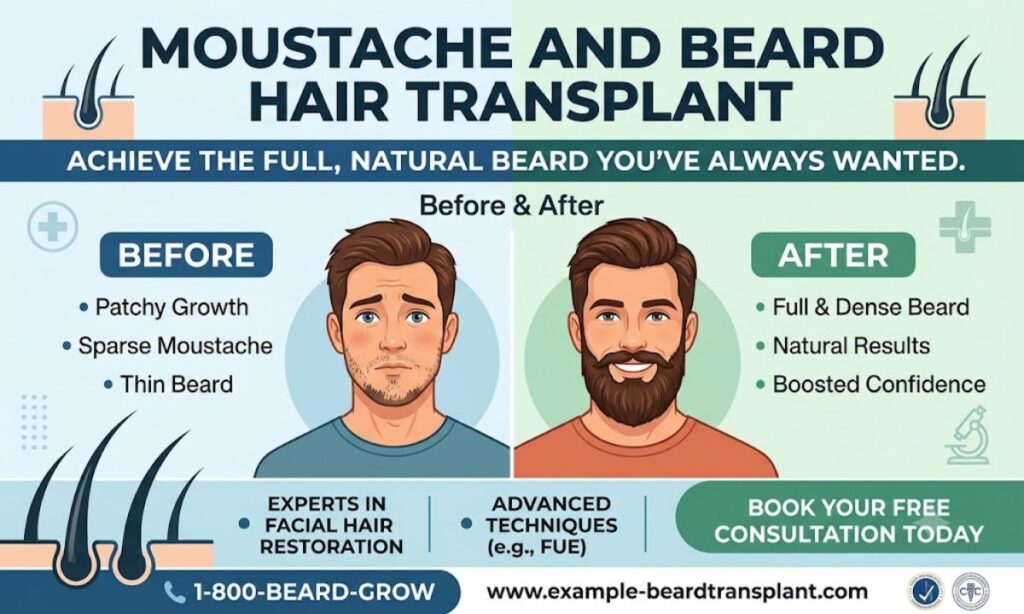
Before & After Beard Hair Transplant Results
Seeing real transformations is often what convinces men to take the next step. Before-and-after photos typically show three key changes:
- Fuller cheek and jaw coverage where hair was previously thin or absent
- Denser moustache growth, especially along the upper lip where genetics often leave gaps
- Even, natural-looking hairlines along the neck and cheek border that blend with existing facial hair
Most clinics photograph patients at set intervals — immediately after surgery, at three months, six months, and again at the 12-month mark — because facial hair regrowth is gradual rather than instant. If a clinic can’t show you a genuine portfolio of local, verifiable results, that’s worth asking about directly.
Take the first step towards regaining your confidence and living life to the fullest today.
What Is a Beard & Moustache Hair Transplant?

A beard and moustache hair transplant is a minor surgical procedure that relocates individual hair follicles from a donor area — usually the back or sides of the scalp — into the beard, cheeks, jawline, or moustache region. Each follicle is placed one at a time and angled to match your natural facial hair growth direction, so the result blends in rather than looking artificial.
The procedure is typically performed under local anaesthetic in a single day, meaning you’re awake and comfortable throughout, with breaks built into the session. Because the transplanted follicles are taken from your own scalp, they carry the same genetic growth characteristics as your original hair, which is why results are considered permanent once fully established.
Who Is a Good Candidate?
You may be a suitable candidate for a moustache or beard transplant if you have:
- Patchy, thin, or uneven facial hair growth
- Scarring from acne, injury, or a previous procedure that has left bald patches
- Sufficient donor hair on the scalp to harvest from
- Realistic expectations about timeline and density
A consultation with a qualified doctor is the only reliable way to confirm suitability, since donor hair quality, skin condition, and the size of the area needing coverage all vary from person to person.
Benefits of Beard and Moustache Hair Restoration

Men choose facial hair transplants for reasons that go beyond aesthetics alone. Common benefits include:
- Permanent results — transplanted follicles continue producing hair for life, unlike topical treatments that only work while you use them
- Natural appearance — precise placement matches your existing hair’s direction, texture, and density
- Improved confidence — many patients report feeling more comfortable in social and professional settings
- Correction of scarring — patchy hair caused by old scars, burns, or previous surgeries can often be camouflaged
- Low maintenance — no daily concealer, filling pencils, or styling workarounds required once healed
- Minimal downtime — most patients return to non-strenuous daily routines within days
| Benefit | Why It Matters |
| Permanence | Grafts are resistant to the hormonal triggers that cause patchy growth |
| Customisation | Density and shape can be tailored to your preferred beard or moustache style |
| Natural blending | Follicles are angled individually to mirror surrounding hair |
| One-time investment | No ongoing product costs once healing is complete |
Moustache and Beard Hair Transplant Cost
Cost is usually the first question patients ask, and it’s a fair one — facial hair transplants are a meaningful investment. Pricing across Australian clinics varies considerably depending on the number of grafts required, the technique used, and the complexity of the area being treated.
As a general guide, beard and moustache transplant pricing in Australia tends to fall into the following ranges:
| Package Type | Typical Grafts Needed | Approximate Cost (AUD) |
| Moustache-only touch-up | 200–500 grafts | $2,500–$4,500 |
| Partial beard (cheeks or patchy sections) | 500–1,200 grafts | $4,500–$7,000 |
| Full beard restoration | 1,200–2,500+ grafts | $7,000–$10,000+ |
A few points worth keeping in mind when comparing quotes:
- Prices are usually quoted excluding GST, so always confirm the final figure
- Some clinics charge per graft, others offer package pricing
- A personalised quote can only be given after an in-person or online consultation, since your donor hair density and the size of the treatment area both affect the final number of grafts required
- Many Brisbane and Toowoomba clinics offer interest-free payment plans or third-party financing options, and some patients explore early superannuation access on compassionate grounds — though eligibility for this is determined by the ATO, not the clinic
Because pricing varies so much between providers, it’s worth getting at least two or three consultations before committing, and asking each clinic for a full breakdown of what’s included (aftercare, follow-up visits, medication) rather than comparing headline numbers alone.
All Also Read This Hair On Beard Hair Transplant
Mustache Transplant Before and After

A moustache transplant follows the same core FUE principles as a full beard procedure but focuses specifically on the upper lip area. This is a popular option for men who have full beard growth everywhere except the moustache, or who simply want denser, more even coverage in that specific zone.
What typically changes between the “before” and “after” stages:
- Before: thin, wispy, or completely absent hair along the upper lip, often with visible skin showing through
- 1–3 months after: initial shedding of transplanted hairs (a normal part of the growth cycle), followed by fine new regrowth
- 3–6 months after: thicker, more consistent hair emerging, though still maturing
- 9–12 months after: full density achieved, with hair texture and thickness matching the rest of the beard
It’s worth noting that moustache skin can be more sensitive than other facial areas due to its proximity to the lips and nose, so aftercare instructions for this zone are often slightly more detailed.
FUE Beard Transplant
FUE (Follicular Unit Extraction) is the most widely used technique for facial hair restoration, and for good reason — it leaves minimal scarring and allows for precise, natural-looking placement.
How FUE Differs From Older Techniques

Unlike strip harvesting methods (FUT), which remove an entire strip of scalp skin and require stitches, FUE extracts individual follicles one at a time using a fine tool. This means:
- No linear scar on the donor area
- Faster healing time
- Less post-procedure discomfort
- Ability to harvest from multiple areas if needed
What Happens During an FUE Session
- Consultation and planning — the doctor maps out your desired beard or moustache shape and calculates graft numbers
- Local anaesthesia — the donor and recipient areas are numbed so you remain comfortable throughout
- Extraction — individual follicular units are carefully removed from the back or sides of the scalp
- Implantation — each follicle is placed into the facial area at the correct angle and direction
- Aftercare briefing — you’ll receive detailed instructions on cleaning, sleeping position, and when it’s safe to shave
How a Beard Hair Transplant and Moustache Hair Transplant Work

The underlying principle is the same for both procedures: donor hair is relocated to an area where facial hair is thin, patchy, or absent, and it continues to grow there permanently because it retains its original genetic characteristics.
Step-by-Step Overview
- Donor hair is assessed for density and quality (usually scalp hair from the back of the head)
- A treatment plan is designed around your desired beard or moustache shape
- Grafts are extracted using the FUE method
- Each graft is implanted individually into the recipient area, matched to your natural hair growth angle
- Healing begins immediately, with visible results unfolding over the following months
Recovery Timeline

Recovery isn’t instant, and setting realistic expectations early makes the process far less stressful. Here’s what a typical timeline looks like:
| Timeframe | What to Expect |
| Days 1–3 | Redness, mild swelling, and slight discomfort in recipient and donor areas |
| Days 4–7 | Scabs begin forming; minor itching is common |
| Days 8–10 | Scabs gradually fall away, revealing early signs of healing |
| 2–4 weeks | Shedding phase — transplanted hairs may fall out temporarily; this is normal |
| 2–3 months | New, fine hair growth begins to emerge |
| 3–6 months | Hair thickens and becomes more consistent in density |
| 6–9 months | Beard or moustache begins taking clear shape |
| 12–18 months | Final results, with fully matured density and texture |
It’s important to resist the urge to judge results too early. Beard regrowth is gradual, and patchiness in the first few months is a completely normal part of the process, not a sign that something has gone wrong.
Aftercare Tips for Best Results
- Avoid touching, scratching, or picking at scabs
- Hold off on shaving or trimming for at least the first 7–10 days, and follow your clinic’s specific shaving protocol after that
- Avoid strenuous exercise, swimming, and saunas for the first two weeks
- Use only the cleansing products recommended by your clinic
- Attend all scheduled follow-up appointments so your surgeon can track healing progress
Choosing a Clinic in Brisbane or Toowoomba

When comparing local providers, consider:
- Whether the procedure is performed by a registered doctor rather than a technician or nurse
- The surgeon’s specific experience with facial hair transplants, not just scalp procedures
- Availability of before-and-after photos from genuine local patients
- Transparent, itemised pricing with no hidden fees
- Clear aftercare and follow-up support included in the package
Both Brisbane and Toowoomba have clinics offering in-person consultations, which makes it easier for regional Queensland patients to access care and follow-up support without long-distance travel.
Step-by-Step Beard and Moustache Transplant Process
Thinking about a beard or moustache transplant but not sure what actually happens on the day — or in the months after? You’re not the only one. Most men researching facial hair restoration have a rough idea it involves “moving hair from the scalp,” but the real process is far more precise, and knowing each stage in advance makes the entire experience less daunting.
This guide walks through exactly what to expect, from your first consultation through to your final growth results, so you can go into the process fully informed.
What Is a Beard and Moustache Transplant?

A beard and moustache transplant is a cosmetic procedure that transfers healthy hair follicles from a donor area — typically the back or sides of the scalp — into areas of the face with sparse, patchy, or absent facial hair. Because the follicles are your own, the regrowth is permanent and blends naturally with your existing hair.
The procedure suits men who have:
- Patchy or uneven beard and moustache growth
- Facial hair loss caused by scarring, burns, or acne
- A desire to reshape or densify their existing beard line
- Sufficient donor hair available on the scalp for extraction
Step 1: Consultation

Every successful transplant starts with a thorough consultation. This is where your facial hair goals, skin condition, and donor hair supply are all assessed together.
During this stage, your practitioner will typically:
- Examine your current facial hair growth pattern and any patchy or scarred areas
- Assess the density and quality of your donor hair, usually at the back of the scalp
- Discuss your desired beard or moustache shape and density
- Estimate the number of grafts required to achieve that result
- Walk you through the procedure, expected timeline, and any risks
This step matters more than people expect. A rushed consultation often leads to a design that doesn’t match your face shape or growth pattern, so a detailed, unhurried assessment here sets the foundation for a natural-looking outcome.
Beard Design Planning
Alongside the medical assessment, your surgeon will usually sketch or map out the intended beard or moustache outline directly on your face. This ensures the final density and shape suit your bone structure rather than following a generic template.
Step 2: Donor Hair Extraction

Once the design is confirmed, the procedure moves to extraction day. The most common technique used for facial hair transplants is Follicular Unit Extraction (FUE), prized for its minimal scarring and precision.
Here’s how it typically works:
- The donor area (usually the back or sides of the scalp) is trimmed and numbed with local anaesthetic
- Individual hair follicles are carefully removed one at a time using a fine extraction tool
- Follicles are selected based on their strength and single-hair structure, which helps create the most natural facial hair appearance
- Extracted grafts are placed in a preservation solution to maintain viability while awaiting implantation
Beard Hair Transplant
Why FUE Over Older Techniques?
| Feature | FUE | FUT (Strip Method) |
| Scarring | Minimal, dot-like marks | Linear scar at donor site |
| Healing time | Faster | Slower |
| Precision | Individual follicle control | Batch extraction |
| Best suited for | Facial hair, smaller sessions | Larger scalp sessions |
FUE has become the preferred method for beard and moustache work specifically because facial skin is more visible day-to-day, and patients want the least noticeable donor-site marks possible.
Step 3: Transplantation (Graft Implantation)

With grafts extracted and prepared, the surgeon moves on to implantation — arguably the most technically demanding part of the entire process.
The steps involved:
- Recipient site creation — tiny incisions are made in the beard or moustache area, carefully angled to match natural hair growth direction
- Graft placement — each follicle is inserted individually into its recipient site
- Density mapping — grafts are distributed to mirror how facial hair naturally grows, denser in some areas and finer in others
- Final shaping check — the surgeon reviews the overall pattern against the original design before finishing
Precision here is what separates a natural-looking result from an obviously “transplanted” appearance. Hair on the face grows in multiple directions depending on the region — jawline, cheeks, chin, and upper lip all have distinct growth patterns — so angle accuracy is critical.
Step 4: Recovery
Recovery begins immediately after the procedure and unfolds gradually over the following weeks. Most patients can resume light daily activities within a few days, though full healing takes longer.
| Recovery Stage | What Happens |
| Days 1–3 | Mild redness, swelling, and tenderness in both donor and recipient areas |
| Days 4–7 | Small scabs form; slight itching is common |
| Days 8–10 | Scabs shed naturally, revealing healed skin underneath |
| 2–3 weeks | Temporary shedding of transplanted hairs — a normal part of the growth cycle |
Aftercare Essentials

- Avoid touching, scratching, or picking at scabs
- Don’t shave or trim the treated area until your surgeon confirms it’s safe
- Skip strenuous exercise, swimming, and saunas for the first two weeks
- Use only the cleansing products recommended by your clinic
- Attend all follow-up appointments so healing can be monitored properly
Step 5: Growth Timeline
Facial hair regrowth is a slow, biological process, not an overnight change. Understanding the full timeline helps manage expectations and avoid unnecessary worry.
| Timeframe | Growth Stage |
| 2–4 weeks | Shedding phase — transplanted hairs fall out temporarily before regrowth begins |
| 2–3 months | Fine, new hair starts to emerge from transplanted follicles |
| 3–6 months | Hair thickens and density becomes more noticeable |
| 6–9 months | Beard or moustache shape becomes clearly visible |
| 9–18 months | Full density and natural texture achieved as follicles complete their growth cycle |
Some patchiness in the early months is completely normal. Growth doesn’t happen evenly across the face, and patience through the first six months makes a significant difference in how the final result looks.
Why Choose Us for Your Beard & Moustache Transplants?
Choosing the right clinic matters just as much as understanding the process itself. When comparing providers, look for:
- Doctor-led procedures, not ones performed primarily by technicians
- Genuine before-and-after results from real patients, not stock photography
- Transparent pricing with a full breakdown of what’s included
- Personalised design consultations rather than one-size-fits-all templates
- Structured aftercare and follow-up support built into your treatment plan
A clinic that takes time on the design stage, uses FUE with precise angle control, and provides clear recovery guidance gives you the best chance of a natural, permanent result you’ll be happy with for years.
Explore Our Full Range of Hair Transplant Services
Beard and moustache restoration is just one part of a broader range of facial and scalp hair transplant options available, including:
- Scalp hair transplants for receding hairlines and crown thinning
- Eyebrow restoration for thinning or over-plucked brows
- Scar correction using targeted hair transplantation
- Female hair restoration for diffuse thinning
If you’re exploring your options, a consultation is the best starting point to understand which procedure — or combination of procedures — suits your goals.
Conclusion
A moustache or beard transplant can change how you feel about your own face. It’s not a quick fix, but it is permanent. For men tired of patchy growth, that trade-off is often worth it.
The process takes patience. Grafts need months to settle and grow. But most men say the wait feels short once real results show up.
If you’re in Brisbane or Toowoomba, help is close by. A consultation is the best first step. It costs nothing to ask questions and learn where you stand.
Frequently Asked Questions
How much does a beard transplant cost in Brisbane?
Beard and moustache transplants in Brisbane generally start around $2,500 and can go up to $10,000 or more, depending on how many grafts you need.
How long does a beard transplant take to grow?
Most men see fine new growth within 2–3 months, with full results appearing between 9 and 18 months.
Is a beard transplant painful?
No. The area is numbed with local anaesthetic, so pain during the procedure is minimal, and any soreness afterward is easy to manage.
Where can I get a beard transplant near me in Queensland?
Clinics in both Brisbane and Toowoomba offer beard and moustache transplants, making it easy for local patients to get treatment without long-distance travel.
Can a moustache transplant fix patchy facial hair?
Yes. A moustache transplant can fill in thin or patchy areas using your own donor hair for natural, permanent results.
Is a beard transplant permanent?
Yes. Since the transplanted hair comes from your own scalp, it keeps growing for life once it’s fully established.
What is the best technique for a beard transplant?
FUE (Follicular Unit Extraction) is the most common and preferred technique, since it leaves minimal scarring and gives natural-looking results.
