
Walk into any barbershop right now and you’ll hear the same request over and over: “low taper, keep it textured on top.” It’s not a trend that showed up overnight — it’s the result of men wanting a haircut that looks intentional without demanding daily upkeep.
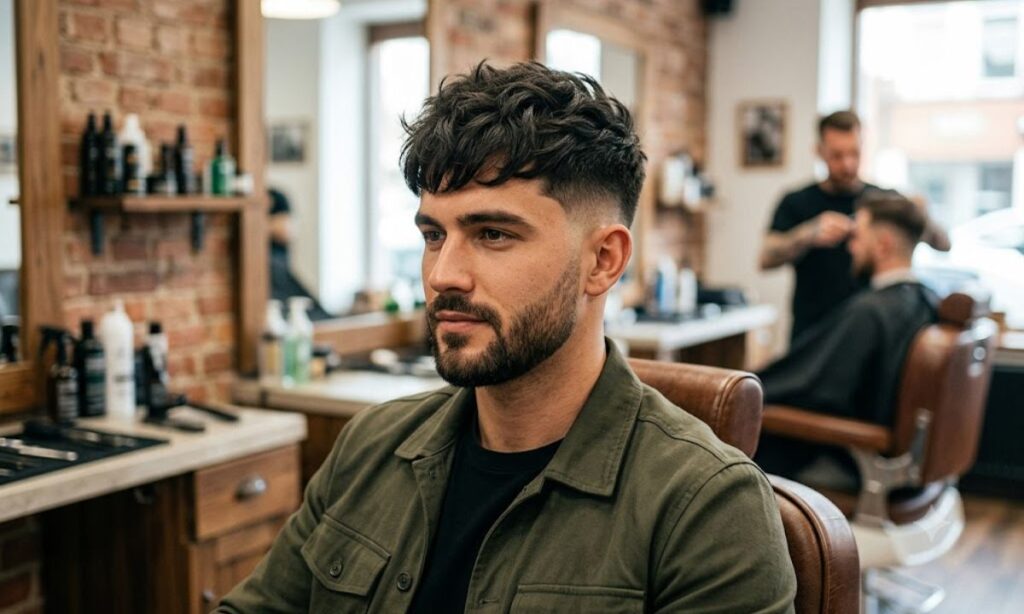
The low taper fade textured top blends a soft, gradual fade near the ears with choppy, matte texture up top, and the combination works on almost every face shape, hair type, and lifestyle.
This guide breaks down exactly what the cut is, why barbers keep recommending it, the best variations to try in 2026, and how to keep it looking sharp between appointments.
What Is a Low Taper Fade Textured Top?

A low taper fade textured top is a two-part haircut. The base is a low fade — the hair gradually shortens starting just above the ears and around the neckline, rather than higher up near the temples like a mid or high fade. The top is left longer and cut with texturizing shears or a razor, giving it a slightly messy, piece-y finish instead of a flat, combed-down look.
Because the fade sits low, more length is kept along the sides, which makes the transition softer and the overall style more office-friendly. The textured top adds movement and volume, so the haircut doesn’t look stiff or overly polished.
Key elements of the cut:
- The base: a low fade starting just above the ears
- The top: cropped or medium-length hair textured with shears or a razor
- The finish: a matte, natural look rather than a sleek, shiny one
Taper Fade Textured
Why Is This Haircut So Popular?

The low taper fade textured top keeps trending because it solves a real problem: most men want a haircut that looks put together without looking “worked on.” It sits comfortably between a buzz cut and a longer style, which is exactly why it shows up so often in 2026 barbershop requests.
A few reasons it keeps climbing in popularity:
- It suits straight, wavy, and curly hair equally well.
- It grows out cleanly, so regrowth doesn’t look patchy.
- It works for gym days, office days, and weekends without restyling.
- It photographs well without needing heavy product.
Benefits of a Low Taper Fade Textured Top
Before jumping into specific styles, it helps to understand why barbers recommend this combination so often.
| Benefit | Why It Matters |
| Low maintenance | The gradual blend means no sharp line to touch up every two weeks |
| Versatile styling | Works for formal settings and casual, everyday looks |
| Face shape friendly | Flatters round, square, oval, and oblong faces |
| Hair type inclusive | Adapts to straight, wavy, curly, and coily textures |
| Easy to grow out | No hard skin-fade line, so regrowth looks natural |
Best Hair Types for This Style

One reason this haircut dominates 2026 trend lists is how well it adapts across hair textures. Here’s a quick breakdown:
- Straight hair: Creates a sleek, structured top with visible texture lines.
- Wavy hair: Natural movement adds extra volume without extra product.
- Curly hair: Curls stay full on top while the low fade keeps the sides tidy.
- Coily hair: Works well with a sponge or twist-out finish for defined texture.
15 Best Low Taper Fade Textured Top Styles
Below are fifteen variations men are asking barbers for right now, grouped by hair type and finish.
1. Classic Textured Crop with Low Taper Fade

A short-to-medium crop cut with choppy layers on top, paired with a soft low fade. This is the most requested version and the easiest to maintain.
2. Low Taper Fade with Textured Fringe
A forward-falling fringe with texture worked through it. The fringe needs trimming roughly every three to four weeks since it grows out faster than the rest of the cut.
3. Low Drop Fade with Textured Top

The fade line curves gently behind the ear instead of running straight, giving a rounder, more natural blend.
4. Low Burst Fade Textured Crop
A fade that curves around the ear rather than continuing in a straight line down the neck — a subtler alternative to a full fade.
5. Textured Quiff with Low Taper Fade

Longer hair on top is styled upward and slightly forward, giving added height while keeping the sides clean.
6. Low Taper Fade with Messy Waves
Ideal for men with natural waves; a light curl cream enhances the texture instead of heavy gel, which flattens it.
7. Textured French Crop, Low Fade

A fringe-forward crop with a low fade underneath instead of the higher skin fade this style usually pairs with — softer and more professional-looking.
8. Low Taper Fade with Curly Textured Top
Curls stay full and bouncy on top while the low fade keeps the perimeter sharp and clean.
9. Slick Back with Low Taper Fade

Texture on top is pushed back rather than left loose, creating a more polished, event-ready look.
10. Low Taper Fade with Side Part
A defined part combined with textured layers gives a slightly more classic, professional edge.
11. Low Taper Fade Buzz-to-Texture Blend

A very short buzzed top with just enough length to texturize — good for men who want minimal daily styling.
12. Low Taper Fade with Volume on Top
Extra length is kept at the crown for added height, balanced by the low, subtle fade.
13. Textured Crop with Low Skin Fade

Combines a skin-faded base with textured top layers for stronger contrast between the sides and crown.
14. Low Taper Fade with Natural Curl Definition
Best suited to thick, coily hair; a curl-defining cream keeps the top textured without frizz.
15. Low Taper Fade with Longer Textured Top

More length is left on top for men who want flexibility to style it differently day to day.
Low Taper Fade Textured Straight Hair (Female)

Women with straight hair are also adopting low taper fade textured looks, particularly on undercut or pixie-inspired styles. The low fade keeps the perimeter neat, while the textured top adds shape and movement that straight hair often lacks on its own. A light texturizing spray or matte paste helps hold the choppy layers without weighing the hair down.
Low Taper Fade Textured Top for Black Hair
On coarser, coilier hair textures, the low taper fade textured top works especially well because the natural volume of the hair does most of the styling work. Barbers typically:
- Keep the fade low and soft rather than a harsh skin fade
- Leave enough length on top for curl pattern to show
- Use a sponge or twist technique to define texture
- Recommend a light oil or curl cream rather than gel
This version tends to hold its shape longer between trims because coilier hair naturally resists falling flat.
Mid Taper Fade for Black Female Styles

A mid taper fade sits slightly higher than a low fade, starting around the temple area instead of just above the ears. For women, this variation is often paired with a curly or coily textured top, giving more contrast between the fade and the crown. It’s a good option for anyone who wants a bit more edge than a low fade offers, while still keeping length on top for styling versatility.
High Taper Fade: How It Compares
A high taper fade starts much higher on the head, usually near the temple, creating a sharper, more dramatic contrast with the top. Here’s how the three fade heights stack up:
| Fade Type | Starting Point | Contrast Level | Maintenance |
| Low taper fade | Just above the ears | Subtle | Every 4–6 weeks |
| Mid taper fade | Around the temples | Moderate | Every 3–5 weeks |
| High taper fade | Near the crown/temple | Bold | Every 2–4 weeks |
A high taper fade suits men who want a sharper, more noticeable style statement, while a low taper fade is the better pick for a softer, everyday look that’s easier to maintain.
How to Ask Your Barber for This Cut

Getting the exact look you want starts with using the right words at the chair. Try this simple script:
- “I’d like a low taper fade, starting just above my ears.”
- “Keep length on top for texture — cut it with shears, not a comb-over style.”
- “Finish it matte, not shiny — I don’t want a lot of product weight.”
Styling and Maintenance Tips
- Use a small amount of matte clay or texture paste — heavy gel flattens the crop effect.
- Rough-dry hair with your fingers instead of a comb for a more natural, piece-y finish.
- Book touch-ups every four to six weeks, since the low fade grows out gradually and doesn’t need frequent line-ups.
- For wavy or curly versions, swap paste for a lightweight curl cream to avoid stiffness.
How to Style a Textured Top: 15 Low Taper Fade Looks for 2026
A low taper fade textured top only looks as good as the styling behind it. The cut itself — a soft fade blending into choppy, piece-y layers — does half the work, but the wrong product or technique can flatten that texture in minutes. Get the styling right, and you get a haircut that looks effortless every single day, not just fresh out of the barber’s chair.
This guide walks through exactly how to style a textured top step by step, then breaks down 15 of the best low taper fade variations men are wearing in 2026, from classic and messy to curly, spiky, and beyond.
How to Style a Textured Top

Styling a textured top isn’t complicated, but the order of steps matters. Skip a step and the texture either falls flat or looks overdone.
Step 1: Start With Damp, Clean Hair
Wash with a lightweight or clarifying shampoo to strip out product buildup, then towel-dry until hair is damp — not soaking wet. Product grips damp hair far better than wet or fully dry hair.
Step 2: Apply a Pre-Styler
A sea salt spray or lightweight texturizing spray adds grip and lift before you touch any wax or clay. Focus the spray at the roots, since that’s where volume starts.
Step 3: Rough-Dry With Your Fingers
Skip the comb. Use a blow dryer on a low or medium heat setting and scrunch hair with your fingers as it dries. This is what actually separates the layers instead of flattening them.
Step 4: Apply a Small Amount of Matte Product
A pea-sized amount of matte clay, molding paste, or texturizing wax is enough for most textured tops. Rub it between your palms, then work it through with your fingertips — never a comb — to keep pieces separated.
Step 5: Shape, Don’t Smooth
Push hair up and forward, or leave it tousled, depending on the look you want. The goal is definition between sections, not one smooth mass.
Products to avoid: heavy pomades, high-shine gels, and anything with a glossy finish. These products glue the hair back into a single shape and undo the separation that makes a textured top work in the first place.
15 Top Low Taper Fade Textured Top Styles

Here are 15 of the most requested ways to wear a low taper fade with a textured top this year, organized by finish and hair type.
1. Classic Low Taper Fade With Textured Top
The benchmark version: a soft, low fade around the ears with medium-length, choppy layers on top. It’s neat enough for the office and easy enough to style in under five minutes.
Best for: straight to slightly wavy hair, most face shapes Product: light matte clay
2. Messy Low Taper Fade With Textured Top

Uneven layers on top create a deliberately tousled, lived-in look. This variation leans casual and works well for anyone who prefers a low-effort morning routine.
Best for: medium-thick hair Product: texturizing paste or clay, applied with fingers only
3. Curly Low Taper Fade With Textured Top
The low fade trims the sides while natural curls stay full and defined on top. Curl pattern does most of the styling work here, so less product is needed than other variations.
Best for: curly and coily hair Product: curl cream, never gel
4. Short Low Taper Fade With Textured Top

A cropped, close-to-the-head version with just enough length on top to texturize. Minimal styling is required, making it a strong option for men who want a wash-and-go routine.
Best for: fine or thinning hair, since shorter texture adds the appearance of density Product: texture powder or a light spray
5. Long Low Taper Fade With Textured Top
More length is left on top, giving flexibility to style it swept back, forward, or loosely tousled depending on the day.
Best for: thick hair that can support extra length without looking heavy Product: sea salt spray plus a light hold clay
6. Textured Crop Low Taper Fade

Combines the classic textured crop shape — short sides, longer choppy top — with a low fade instead of the higher fade the crop is usually paired with. This softens the contrast for a more versatile, everyday look.
Best for: straight and wavy hair Product: molding paste
7. Low Taper Fade With Spiky Textured Top
Hair on top is styled upward into defined, separated spikes rather than left loose. It’s a sharper, more deliberate look than the messy variations above.
Best for: shorter to medium top length Product: strong-hold clay or gum, applied at the roots
8. Low Taper Fade With Textured Fringe

A forward-falling fringe with texture worked through the ends. Since the fringe grows out faster than the rest of the cut, it typically needs trimming every three to four weeks.
Best for: straight hair, oval and square face shapes Product: light paste on damp hair, combed forward
9. Low Taper Fade With Textured Quiff
Length is pushed upward and slightly back at the front, adding height while the low fade keeps the sides minimal.
Best for: medium-length hair, round or square faces Product: blow-dry with a round brush, then set with clay
10. Low Taper Fade With Slicked Textured Top

Texture is styled back rather than left loose, creating a more polished, event-ready version of the cut.
Best for: any hair type with at least medium length on top Product: light gel or pomade — the one exception where shine works
11. Low Taper Fade With Side-Parted Texture
A defined part combined with choppy layers gives a slightly more classic, professional edge without losing the textured finish.
Best for: straight and wavy hair Product: matte paste, applied after the part is set
12. Low Taper Fade With Volume-Forward Top

Extra length is concentrated at the crown, creating noticeable height that balances the subtlety of the low fade.
Best for: thick or medium-density hair Product: volumizing spray plus a light clay
13. Low Taper Fade With Wavy Textured Top
Natural waves add movement and texture on their own, so the fade does most of the visual work by keeping the sides tidy.
Best for: wavy hair Product: curl cream instead of heavy gel, which can make waves look stiff
14. Low Taper Fade With Skin-Faded Contrast

A slightly more dramatic version where the sides fade closer to the skin, increasing contrast with the textured top above it.
Best for: men who want more visual definition without changing the top style Product: any of the above, depending on top length
15. Low Taper Fade With Natural Texture Only
No product at all — just a rough towel-dry and finger-styling to let natural hair texture do the work. This is the lowest-maintenance version on the list.
Best for: naturally textured or curly hair Product: none required, or a small amount of leave-in cream
Comparing the Top Styling Products

| Product | Hold Level | Finish | Best Style Match |
| Sea salt spray | Light | Matte, natural | Pre-styler for any variation |
| Texturizing clay | Medium | Matte | Classic, messy, textured crop |
| Molding paste | Medium-strong | Matte | Long or volume-forward tops |
| Curl cream | Light-medium | Natural, defined | Curly and wavy variations |
| Styling gum | Strong | Matte | Spiky and structured tops |
| Light gel or pomade | Strong | Slight shine | Slicked-back variation only |
Maintenance Tips to Keep the Style Sharp
- Trim every four to six weeks. The low fade grows out gradually, but the top needs regular shaping to keep its texture.
- Wash two to three times a week. Washing daily strips natural oils that help texture hold; washing too rarely leads to buildup.
- Use less product than feels necessary. A pea-sized amount is usually enough — textured styles rely on separation, not heavy coating.
- Ask your barber for point cutting or razor work. These techniques create the piece-y, separated finish that scissor-only cuts can’t replicate.
- Protect with heat spray if you blow-dry frequently, since repeated heat exposure can dry out finer hair types.
Low Taper Fade With Textured Top: 8 Modern Styles Worth Trying
Ask any barber whose cut walks through the door most often in 2026, and there’s a good chance they’ll say the same thing: a low taper faded with textured top. It’s the haircut that manages to look sharp and relaxed at the same time — sides that fade quietly into the neckline, and a top that has enough movement to look styled without trying too hard.
What makes this cut so flexible is how many directions the top can go. Wavy, fringed, side-swept, tousled, layered — the low fade base stays consistent, but the top completely changes the personality of the haircut. Below are eight of the most popular variations men are asking for right now, along with how to style each one, how to maintain it, and exactly what to say when you sit down in the barber’s chair.
Low Taper Fade With Wavy Textured Top

Natural waves do most of the visual work in this variation. The low fade keeps the sides quiet and clean, while the waves on top are left to move freely instead of being combed flat.
- Best for: naturally wavy hair, medium to thick density
- Styling tip: apply sea salt spray to damp hair, then air-dry or diffuse for natural movement
- Why it works: waves add texture on their own, so styling time stays short
This is one of the lowest-effort variations on this list, since the hair’s natural pattern is already doing the styling.
Low Taper Fade Textured Top With Fringe
The fringe version pairs a low, soft fade with a choppy fringe that falls forward across the forehead. It’s one of the most requested combinations for men who want a bold front section without a high-contrast fade underneath.
- Best for: oval, round, and diamond face shapes
- Styling tip: blow-dry the fringe forward with a thickening spray, then define pieces with a small amount of texture clay
- Barber phrase to use: “Fringe with a low taper, keep the front just above the brows”
Fringe length is the fastest-growing part of this cut, so it usually needs attention between full fade appointments.
Low Taper Fade Textured Top With Thick Hair

Thick hair holds texture exceptionally well, which makes this one of the easiest hair types to work with for this style. The low fade removes bulk from the sides while the top keeps its natural volume and body.
- Best for: thick, dense hair that tends to look heavy when left untouched
- Styling tip: use a lightweight matte cream instead of a heavy pomade, which can make thick hair look greasy rather than textured
- Why it works: thinning the top slightly with point cutting prevents the classic “helmet” look thick hair is prone to
Barbers often recommend thinning shears here specifically to manage weight without losing length.
Low Taper Fade With Side-Swept Textured Top
A side-swept top adds a slightly more polished, put-together feel. The hair is directed to one side rather than pushed straight up or left loose, giving the cut a subtle formal edge.
- Best for: straight and wavy hair, professional settings
- Styling tip: apply a light gel or matte paste to damp hair, then comb in the direction of the sweep before it dries
- Face shapes it flatters: square and round, since the diagonal line softens angular features
This variation sits between a full side part and a loose, tousled top — structured, but not stiff.
Low Taper Fade With Tousled Textured Top

The tousled version is built for movement. Layers are cut unevenly on purpose, and styling is meant to look undone rather than groomed to perfection.
- Best for: medium-length hair, casual and everyday wear
- Styling tip: scrunch a small amount of texturizing paste through damp hair using only your fingers — never a comb
- Why it works: the low fade keeps the sides controlled, which balances out the deliberate messiness on top
This is often the go-to recommendation for men who want a low-maintenance style that still looks intentional.
Low Taper Fade Textured Top With Quiff
The quiff variation lifts hair up and slightly back at the front, adding height while the low fade keeps the sides minimal and understated.
- Best for: straight and thick hair, professional or formal occasions
- Styling tip: blow-dry with a round brush while lifting at the roots, then set with a strong-hold pomade or clay
- Maintenance: visit the barber every two to three weeks to keep the fade fresh, since quiffs show growth at the crown faster than flatter styles
Of all eight variations, the quiff tends to require the most daily styling time.
Hairstyles for Men in
Low Taper Fade With Layered Textured Top

Layering adds dimension by cutting the top hair at slightly different lengths, which creates natural-looking depth instead of one uniform length.
- Best for: fine or thin hair, since layering creates the illusion of fullness
- Styling tip: use a volumizing spray at the roots before blow-drying, then finish with a light matte product
- Why it works: shorter layers underneath support longer pieces on top, adding lift without extra product
This variation is frequently recommended for men who feel their hair looks flat or thin without added texture.
Modern Low Taper Fade With Textured Top
The “modern” take combines elements from several of the above — a slightly higher point of taper blend, sharper texture through point cutting, and a top that’s versatile enough to style differently day to day.
- Best for: most hair types and face shapes
- Styling tip: rough-dry with fingers, apply matte clay, then shape loosely rather than combing into one direction
- Why it works: it’s the most adaptable version, easy to dress up or down depending on the day
Many barbers treat this as the default recommendation for first-time clients trying a textured top.
Comparing the 8 Styles
| Style | Best Hair Type | Styling Effort | Trim Frequency |
| Wavy textured top | Wavy | Low | 5–6 weeks |
| Textured top with fringe | Straight, wavy | Medium | 3–4 weeks |
| Thick hair textured top | Thick, dense | Medium | 4–5 weeks |
| Side-swept textured top | Straight, wavy | Medium | 4–5 weeks |
| Tousled textured top | Medium-thick | Low | 4–6 weeks |
| Textured top with quiff | Thick, straight | High | 2–3 weeks |
| Layered textured top | Fine, thin | Medium | 4–5 weeks |
| Modern textured top | Most types | Medium | 4–5 weeks |
Maintenance Tips About Low Taper Fade Textured Top

Keeping any low taper fade textured top looking sharp comes down to a few consistent habits:
- Wash two to three times a week. Daily washing strips natural oils that help hold texture; too little washing leads to product buildup.
- Use matte products, not high-shine ones. Clay, paste, and texture powder support separation; heavy pomades flatten it.
- Rough-dry instead of combing. Fingers create natural separation; combs push hair into one uniform shape.
- Book regular trims. The fade grows out gradually, but the top needs shaping more often to keep its texture intact.
- Protect against heat damage. If you blow-dry often, a light heat protectant spray keeps hair from drying out over time.
How to Ask Your Barber
Getting the exact look you want starts with clear communication in the chair. A short, specific script works better than a vague description.
- “I’d like a low taper fade, starting just above the ears.”
- “Keep length on top for [wavy / fringe / quiff / layered] texture — cut with shears or a razor, not just scissors over comb.”
- “Finish with a matte look, not shiny.”
- Bring a reference photo whenever possible — barbers can match a specific texture level far more accurately with a visual than a description alone.
How Often Should You Get a Trim?

Trim frequency depends on which variation you’re wearing, but as a general rule:
- Low-maintenance versions (wavy, tousled, natural texture): every 5–6 weeks
- Standard versions (thick hair, layered, modern, side-swept): every 4–5 weeks
- Higher-maintenance versions (fringe, quiff): every 2–4 weeks
The fade itself grows out slowly and rarely needs urgent attention, but the top section — especially fringes and quiffs — grows noticeably faster and affects how sharp the whole style looks.
Frequently Asked Questions
What is the best low taper fade haircut for textured hair?
The classic low taper fade with a textured crop on top is the most popular pick — clean sides, choppy layers, and easy daily styling.
What haircut should I ask for with a low taper fade?
Ask for “a low taper fade with a textured top,” specifying your preferred top length so the barber can shape it with shears or a razor.
Is a low taper fade good for thick hair?
Yes, a low taper fade works great on thick hair — it removes bulk from the sides while keeping natural volume and texture on top.
How long does a low taper fade with a textured top last?
It typically lasts four to six weeks before needing a trim, since the low fade grows out gradually without a hard line.
What’s the difference between a low fade and a taper fade?
A taper fade blends gradually with no hard edge, while a low fade specifically starts the blend just above the ears — a low taper fade combines both traits.
Does a low taper fade textured top work for curly hair?
Yes, curly hair holds texture especially well on top while the low fade keeps the sides neat and controlled.
What products are best for styling a textured top?
Matte clay, texturizing paste, or sea salt spray work best — they add definition without the shine or weight of gel and pomade.
Conclusion
The low taper fade textured top isn’t just another trend. It works with almost any hair type. That’s why so many men keep asking for it.
You don’t need a bold, high-contrast fade to look sharp. A soft, low blend does the job just fine. Add some texture on top, and the whole look feels effortless.
Pick any of the 15 styles above and make it your own. Talk to your barber about what suits your face shape. A great haircut should feel like you, not just a trend.
