

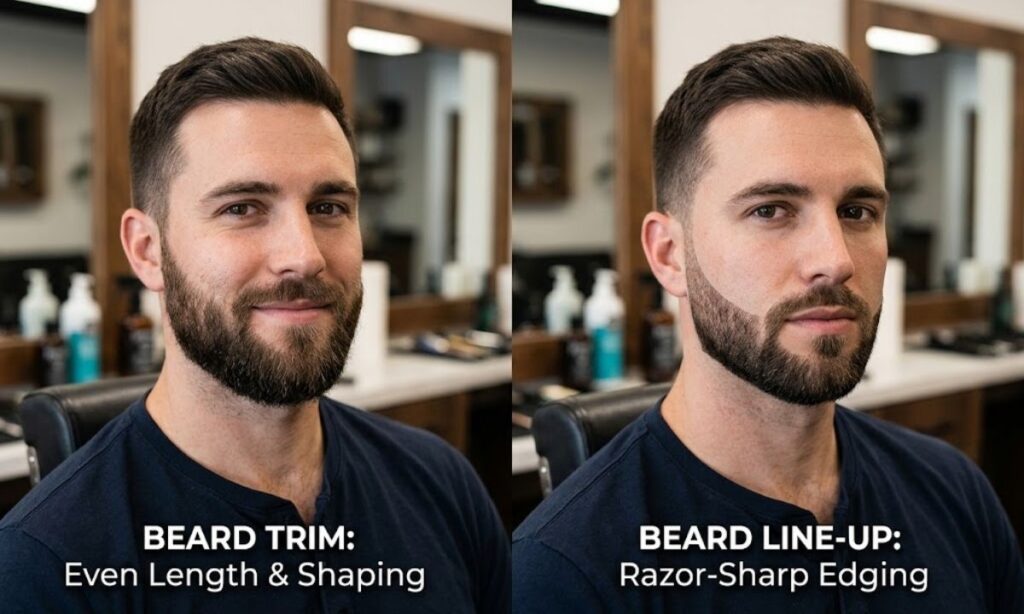
Walk into any barbershop and you’ll hear these two terms tossed around like they mean the same thing. They don’t. A beard trim and a beard line-up are two completely different services, and mixing them up is one of the fastest ways to end up with a beard that looks either shapeless or oddly sharp-edged.
If you’ve ever sat in the chair and weren’t sure what to ask for, this guide clears it up. Below, you’ll learn exactly what each service does, when you need one over the other, and how to keep your beard looking sharp between barber visits.
What Is a Beard Trim?
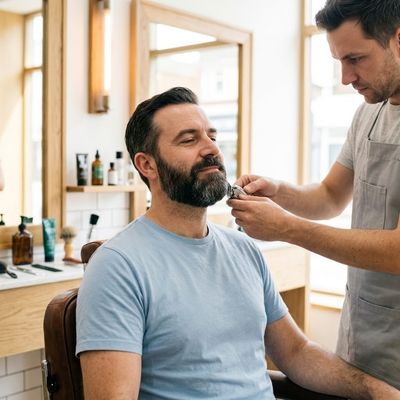
A beard trim is the maintenance step that controls length, bulk, and overall density of your facial hair. It doesn’t touch the outline of your beard — it simply cleans up what’s already growing so it looks even and healthy.
As your beard grows, hair on the cheeks, jaw, and chin doesn’t grow at the same rate. Left alone, this creates a patchy, uneven look. A trim fixes that by cutting the beard down to a consistent length using scissors or a clipper with a guard.
Beard Trim
What Happens During a Beard Trim?
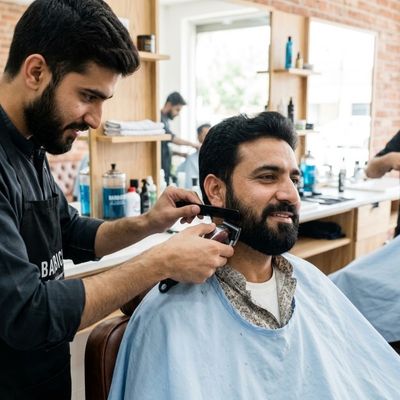
A professional beard trim usually includes:
- Combing the beard to detect flyaways and uneven patches
- Trimming with a clipper guard or shears to set a uniform length
- Removing split ends and stray hairs
- Blending the moustache into the beard for a natural transition
- Light shaping to keep the beard’s natural silhouette intact
The end goal is a clean, tidy beard shape that still looks natural — not sculpted or edged.
Signs You Need a Beard Trim
- Your beard feels bulky or hard to manage
- You notice uneven length across your cheeks and chin
- Split ends are visible
- Your beard hasn’t been touched in 4–6 weeks
Barber Tips: Always start with a longer guard and work your way down. Cutting too much hair at once is the most common at-home trimming mistake, and it can take weeks to grow back.
What Is a Beard Line-Up?
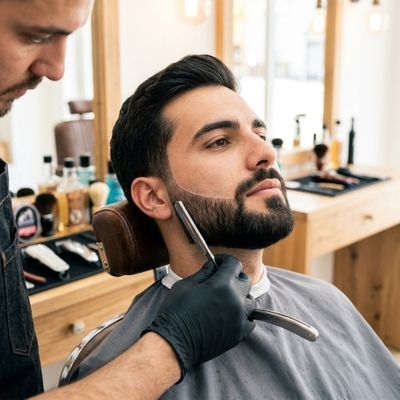
A beard line-up — also called a shape-up or edge-up — is all about definition, not length. Instead of cutting down the beard itself, a barber uses a trimmer or straight razor to carve sharp, clean edges around the beard’s border.
This service focuses on three zones:
- Cheek line – the upper boundary where the beard meets the cheek
- Neckline – the lower boundary separating the beard from the neck
- Sideburn area – where the beard connects (or blends) with the haircut
What a Beard Line-Up Includes
- Mapping a clean, symmetrical cheek line
- Shaving a crisp neckline just below the jaw
- Connecting the sideburns smoothly into the beard or fade
- Using a straight razor or detail trimmer for sharp, precise edges
A neckline set too high makes the beard look stubby, while one set too low leaves it looking unkempt — so precision matters here more than almost anywhere else on the face.
Barber Tips: A clean neckline is often the single biggest difference between a beard that looks intentionally groomed and one that looks grown by accident. If you can only maintain one thing between barber visits, make it your neckline.
Beard Trim vs Beard Line-Up: Key Differences
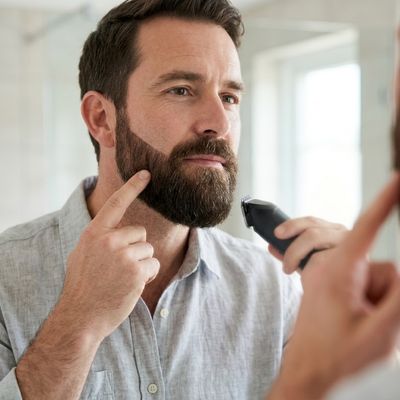
Both services work together, but they solve different problems. Here’s a side-by-side comparison to make the distinction clear.
| Feature | Beard Trim | Beard Line-Up |
| Main purpose | Controls length and bulk | Defines edges and outline |
| Tools used | Clipper with guard, scissors | Trimmer, straight razor |
| Focus area | Entire beard surface | Cheek line, neckline, sideburns |
| Frequency | Every 4–6 weeks | Every 1–3 weeks |
| Best for | Uneven, bulky, or overgrown beards | Blurry edges, messy neckline |
| Result | Neat, even, natural shape | Sharp, structured, defined outline |
| Can be skipped if | Beard is already short and even | Edges are recently maintained |
Barber Tips: A beard trim without a line-up leaves you with a tidy but shapeless mass of hair. A line-up without a trim gives you sharp edges on an overgrown beard. Getting both is what creates a genuinely polished look.
Barber Tips: If you’re short on time, a neckline touch-up alone (a mini line-up) does more for a groomed appearance than skipping maintenance altogether.
Popular Beard Trim Styles

Once you understand the difference between a trim and a line-up, the next step is choosing a style that fits your face shape and lifestyle. Here are some of the most requested beard trim styles at barbershops today.
Beard Line Neck
This style keeps the neckline high and sharply defined, creating a clean separation between the beard and neck. It works especially well for shorter beards where the neck area is more visible and less covered by hair length.
Line Beard

A line beard emphasizes crisp, geometric edges along the cheeks and jaw, giving the beard a structured, almost architectural appearance. It’s a popular choice for men who want a bold, well-defined look.
Light Beard
A light beard uses shorter guard lengths to keep facial hair close to the skin while still maintaining full coverage. It’s low-maintenance and works well for a professional, understated appearance.
Defined Jawline Beard

This style uses strategic trimming and line-up work to visually sharpen the jawline, adding structure to rounder or softer face shapes.
Chin-Focused Beard
Here, length is concentrated around the chin while the cheeks and sides are kept shorter, creating a lengthening effect that suits shorter or wider faces.
Long Sculpted Beard

For those growing out their beard, this style combines regular trimming with consistent line-up maintenance to keep a long beard looking intentional rather than unruly.
How Often Should You Get Each Service?
- Beard trim: every 4–6 weeks, or when you notice bulk and uneven length
- Beard line-up: every 1–3 weeks, since edges grow out and blur faster than overall length
- Both together: recommended for anyone maintaining a structured, barbershop-quality beard
Maintaining Your Beard Between Visits

- Wash and condition your beard regularly to keep it soft and manageable
- Use beard oil or balm to prevent dryness and itchiness
- Comb daily to train hair growth direction and spot uneven patches early
- Touch up the neckline at home with a detail trimmer if visits are spaced out
- Avoid over-trimming — remove hair gradually rather than all at once
How to Trim Your Beard at Home: Step-by-Step Neckline & Line-Up Guide
A great beard doesn’t happen by luck — it happens because someone knows how to trim a beard properly. The good news is you don’t need a barbershop appointment every time your neckline gets fuzzy or your cheek line starts to blur. With the right tools and a little patience, you can learn how to trim your beard at home and get results that look just as sharp.
This guide walks you through the full process, from washing your beard to defining your neckline, plus maintenance tips to keep everything looking clean between trims.
Beard Line
How to Line Up Beard Neckline

Before picking up a trimmer, it helps to understand what you’re aiming for. Your neckline is the boundary that separates your beard from your neck, and getting it right instantly makes your beard look more intentional.
A good rule of thumb: your neckline should sit just above your Adam’s apple, curving gently upward toward your ears rather than forming a deep, round “U” shape. Set it too high and your beard looks unnaturally short. Set it too low and you risk the dreaded neckbeard look.
Barber Tips: Look straight ahead in the mirror. Any hair visible below your chin from that angle usually needs to go.
Beard Line-Up Spray
Many barbers and grooming brands now use a beard line-up spray — a clear, alcohol-based spray applied before trimming. It works by whitening or highlighting the skin so the trimmer or razor can follow guidelines with more precision, especially for men with darker beard hair.
Benefits of using a line-up spray include:
- Makes cheek lines and necklines easier to see and follow
- Reduces the chance of crooked or uneven edges
- Works well for both clippers and straight razors
- Especially useful for first-timers trimming at home
If you don’t have a line-up spray, a white grease pencil or eyebrow pencil can work as a temporary substitute to mark your guidelines before cutting.
How to Trim Your Beard at Home

Trimming your own beard is easier when you break it down into a simple, repeatable routine. Follow these five steps every time.
Step 1: Wash and Dry Your Beard
Start with a clean, dry beard. Washing removes product buildup and lets your beard hair fall naturally, so you can see exactly where it needs work. Trimming a wet or product-heavy beard often leads to uneven results once it dries.
Step 2: Use the Right Tools
You don’t need a huge kit, but a few essentials make a big difference:
- Electric trimmer – for setting length and defining lines
- Beard comb – to detangle and direct hair growth
- Sharp scissors – for trimming stray or long hairs
- Straight razor or safety razor – for a clean neckline finish
- Line-up spray or grease pencil – to mark guidelines
- Handheld mirror – to check the back and sides
Step 3: Trim the Length First
Comb your beard downward so the hairs lie flat, then attach a guard to your trimmer based on your desired length. Work in the direction hair grows, trimming gradually rather than removing too much at once. Go over the cheeks, jaw, and chin evenly, checking both sides in the mirror as you go.
Step 4: Define the Neckline
This is where most of the “shape” in your beard comes from.
A simple guideline:
- Place two fingers together and set them on your neck, with the top finger resting just above your Adam’s apple.
- Use that spot as the center point of your neckline curve.
- Trim outward from the center toward each ear, following a gentle upward arc — not a straight or deeply rounded line.
- Shave everything below the line clean using a razor for the sharpest finish.
Keep the neckline a little lower than you think it should be. A too-high neckline can shorten your chin’s appearance and make the beard look thin.
Step 5: Clean the Cheek Line
Decide how high you want your cheek line to sit. A natural cheek line usually follows where the bulk of your beard already grows, connecting the sideburn to the mustache. Use your trimmer to clean up stray hairs above this line, and avoid trimming too aggressively if your beard is naturally patchy.
Barber Tips: Trim a little at a time. You can always remove more hair, but you can’t put it back.
Beard Trimming Tips for Better Results
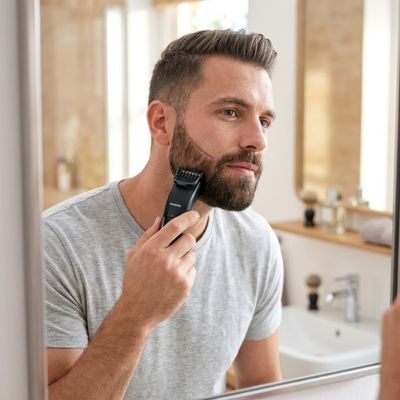
- Always trim in good lighting so you can see uneven patches clearly
- Use a lower guard setting first, then adjust shorter if needed
- Trim symmetrically by working from the center outward on both sides
- Let your beard dry completely before final touch-ups
- Apply beard oil or balm afterward to soothe the skin and soften hair
Barber Tips: If you’re unsure about symmetry, take a photo from the front. Cameras often reveal unevenness that mirrors don’t.
Beard Maintenance Schedule
Keeping your beard looking sharp is about consistency, not effort. Here’s a simple schedule to follow.
| Task | Recommended Frequency |
| Full beard trim (length) | Every 4–6 weeks |
| Neckline touch-up | Every 1–2 weeks |
| Cheek line clean-up | Every 2–3 weeks |
| Washing beard | 2–3 times per week |
| Beard oil or balm application | Daily |
| Combing/brushing | Daily |
Barber Tips: Set a reminder on your phone for neckline touch-ups. It’s the area that grows out fastest and is most noticeable when neglected.
When to Visit a Professional Barber
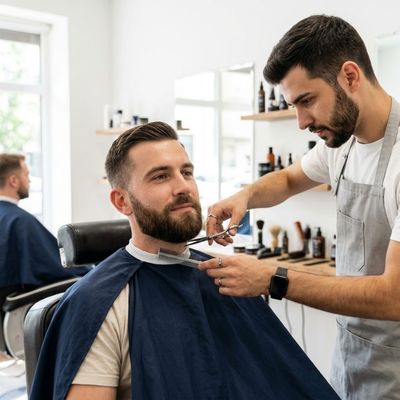
Trimming at home works well for regular maintenance, but there are times when a barber visit makes more sense:
- You’re changing your beard style significantly
- Your beard has become very thick or difficult to manage at home
- You want a precise, symmetrical shape-up for a special occasion
- You’ve made an uneven cut and need it corrected
- You want professional advice on a style that suits your face shape
A barber’s trained eye and steady hand can fix mistakes and create sharper lines than most at-home tools allow, especially around the back of the neck where visibility is limited.
Frequently Asked Questions
What’s the difference between a beard trim and a line up?
A beard trim cuts length and bulk to keep the beard even, while a line-up shapes the edges — cheek line, neckline, and sideburns — for a sharp outline.
Do I need a trim and a line up at the same time?
Yes, most barbers do both in one visit — trimming for length first, then lining up the edges for a clean, finished look.
How often should you get a beard line up?
Every 1 to 3 weeks, since edges grow out and blur much faster than the overall beard length.
Is a beard line up the same as a shape up?
Yes, “line-up,” “shape-up,” and “edge-up” are just different names for the same edge-defining barbershop service.
What does a beard trim include?
A beard trim includes combing out the beard, cutting it to an even length with a clipper or scissors, and removing split ends.
Can a barber line up your beard without cutting it?
Yes, a barber can shape your cheek line, neckline, and sideburns without shortening the length of your beard.
How much does a beard line up usually cost?
A beard line-up typically costs between $10 and $25, depending on the barbershop and your location.
Conclusion
A beard trim and a beard line-up are not the same thing. One controls length. The other creates sharp edges. Knowing this difference changes how your beard looks.
A trim keeps your beard neat and even. It removes bulk and split ends. A line-up sharpens your cheek line and neckline. Together, they give you a finished, polished look.
Don’t skip either service. A trim alone looks shapeless. A line-up alone looks messy if the beard is overgrown. Get both, and your beard will always look barbershop-ready.
