

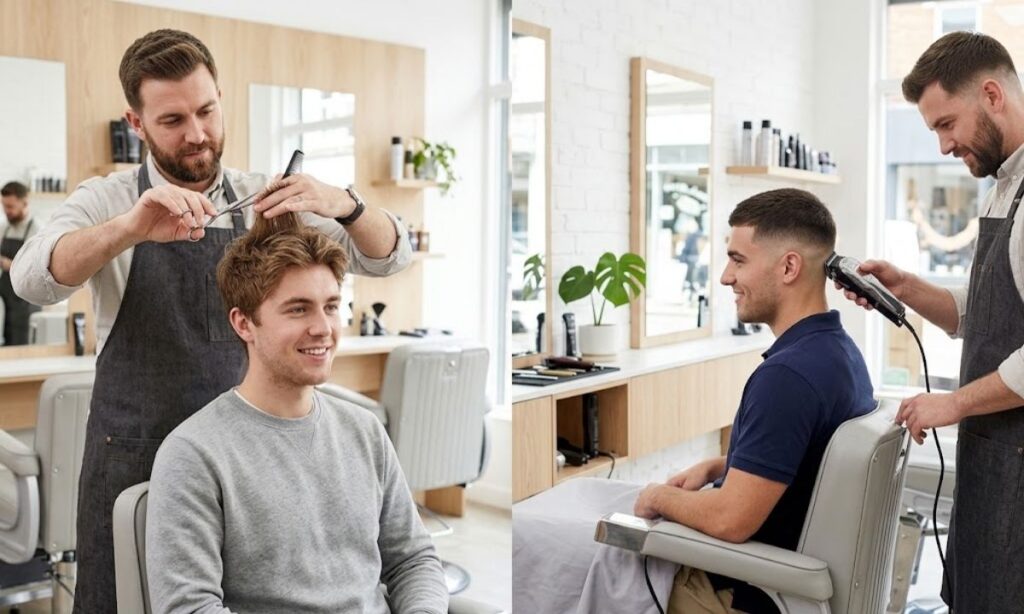
Choosing between a scissor cut and a clipper cut is one of the most common decisions people face in the barber’s chair. Both techniques can deliver a sharp, stylish look, but they work in completely different ways and produce different results. Whether you want a soft, textured finish or a clean, close crop, understanding the scissor cut vs clippers debate will help you walk into your next appointment with confidence and ask for exactly what you want.
In this guide, we’ll break down what each method involves, compare them side by side, and help you decide which one fits your hair type, lifestyle, and budget.
What is a Scissor Cut?
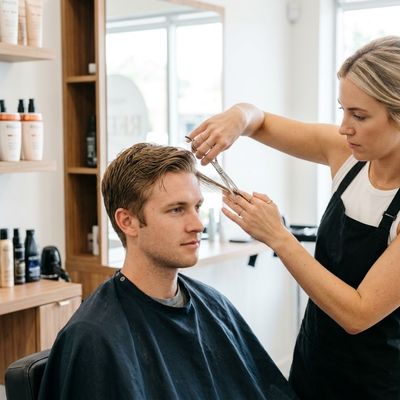
A scissor cut is a haircut performed entirely (or mostly) with handheld shears rather than electric tools. The barber lifts small sections of hair and trims them at an angle, creating soft, blended layers that follow the natural shape of your head.
This technique is popular because it allows for:
- Natural-looking texture and movement
- Softer lines with no harsh edges
- Better blending on curly, wavy, or thick hair
- A style that grows out more gracefully
Because every strand is cut individually, a scissor cut generally takes more skill and more time, but the payoff is a refined, tailored finish that clippers alone can’t replicate.
Scissor Cut vs Clippers
What is a Clipper Cut?
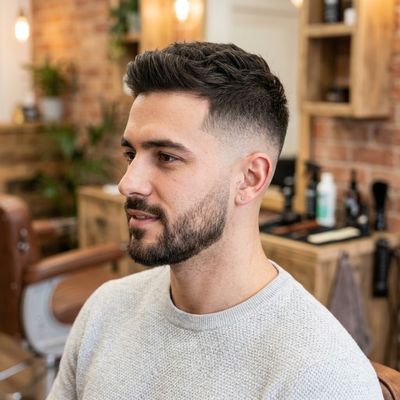
A clipper cut relies on electric clippers fitted with interchangeable guards to control hair length. The barber runs the clippers over the head in smooth, even strokes, producing a uniform, closely cropped result.
Clipper cuts are the go-to choice for:
- Buzz cuts, crew cuts, and fades
- Fast, low-maintenance styling
- Very short, close-to-the-scalp looks
- Sharp, defined outlines and hairlines
Most modern haircuts actually blend both tools — clippers handle the bulk removal and fades, while scissors add finishing texture on top. Still, when barbers or clients say “scissor cut vs clippers,” they’re usually referring to which tool does most of the work.
Scissor Cut vs Clippers: Quick Comparison
Here’s a side-by-side look at how a scissor cut compares with a clipper cut across the factors that matter most.
| Feature | Scissor Cut | Clipper Cut |
| Finish | Soft, natural, blended | Sharp, uniform, close |
| Best for | Longer hair, texture, layers | Fades, buzz cuts, short styles |
| Precision | High, but manual | High, guard-controlled |
| Time needed | Longer | Faster |
| Grow-out | Gradual and natural | Faster, more noticeable |
| Maintenance | Every 4–6 weeks | Every 2–3 weeks |
| Cost | Slightly higher | Usually lower or similar |
Cutting Technique and Precision
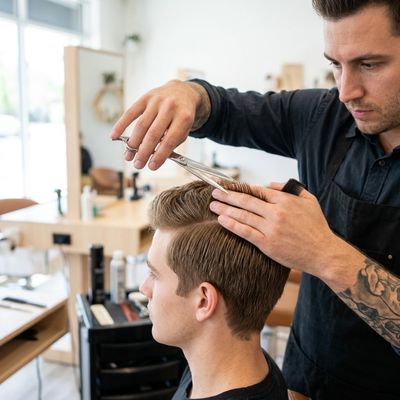
The core difference in the scissor cut vs clippers comparison comes down to how each tool removes hair.
Scissors cut hair section by section at an angle, which lets the barber add texture, remove weight selectively, and shape the cut to your head. This is called “scissor over comb” when combined with a comb for extra control, and it’s a technique that takes years to master.
Clippers, on the other hand, use oscillating blades and preset guard lengths for speed and consistency. They excel at creating perfectly even lengths, but they don’t offer the same freedom to sculpt texture the way scissors do. A skilled barber can achieve outstanding precision with either tool — the difference is in the type of precision each one delivers.
Time Required
If you’re short on time, this factor alone might settle the scissor cut vs clippers question for you.
- Clipper cuts are fast — most take 15 to 25 minutes since the guards do most of the work.
- Scissor cuts take longer, often 30 to 45 minutes, because every section is trimmed by hand.
- Combination cuts (clippers for sides, scissors for the top) usually fall somewhere in between.
For a quick refresh between busy weeks, clippers win. For a detailed, customized style, scissors are worth the extra time.
Customization Options

Scissors give barbers far more room to personalize a haircut. They can create choppy layers, soft fringes, or textured crops that suit your face shape and hair density. Clippers, while limited to guard-based lengths, still allow for plenty of customization through fades, tapers, and design lines.
If you want a completely unique look, a scissor cut — or a scissor-and-clipper combination — usually delivers more flexibility than clippers alone.
Clipper Cut Female
Clipper cuts aren’t just for men. A clipper cut female style, such as an undercut, pixie fade, or buzzed nape, has become increasingly popular for its bold, low-maintenance appeal. Many women choose a clipper cut to pair with longer hair on top for an edgy contrast, or as a fully clipped short style for a fresh, modern look. Barbers use the same guard system for female clipper cuts as they do for men, adjusting lengths to flatter the face shape and desired volume.
Hair Length Compatibility

Not every hair length works equally well with both tools.
- Short hair (buzz cuts, crew cuts, fades): Clippers are ideal and often the only practical option.
- Medium hair (textured crops, layered styles): A mix of scissors and clippers works best.
- Long hair (shoulder-length or longer): Scissors are essential for shaping, layering, and trimming without losing length.
This is why most professional haircuts don’t rely on just one tool — the scissor cut vs clippers choice often depends on which part of the head is being worked on.
Cost Per Visit
Pricing varies by salon or barbershop, but scissor cuts are generally priced slightly higher than clipper cuts because of the extra time and skill involved. A basic clipper cut might cost less since it’s quicker to perform, while a detailed scissor cut or a combination style with texturizing can cost more. It’s always worth asking your barber for a price breakdown before booking, especially if you want added services like a fade or beard trim.
Scissor Cut Fade

A scissor cut fade blends the best of both worlds. The sides and back are faded using clippers for that smooth, gradual transition, while the top is shaped and textured using scissors for a softer, more natural finish. This style has become a favorite among people who want the sharpness of a fade without the fully uniform look of an all-clipper cut. It’s a great example of how scissor cut vs clippers isn’t always an either-or decision — sometimes the best haircut uses both.
Which One Should You Choose?
Ask yourself these quick questions before your next appointment:
- Do you want a low-maintenance style that holds its shape for weeks? Choose clippers.
- Do you prefer a soft, natural, textured look? Choose scissors.
- Do you want the best of both? Ask for a scissor-and-clipper combination.
What is Scissor Cut in Football?

In football (soccer), a “scissor” has nothing to do with hair at all. It’s a dribbling move, closely related to the step-over, where a player fakes a pass by swinging one leg around the ball in a shearing motion before cutting away with the other foot. The move gets its name because the legs cross over the ball like a pair of scissors closing.
Some players also use “scissor kick” to describe the bicycle kick, an acrobatic strike where the legs snap through the air in a scissor-like motion to hit the ball overhead. Both terms borrow the imagery of cutting or crossing motion — the same idea barbers use when they talk about a scissor cut, just applied to footwork instead of hair.
Now, back to the barbershop.
Scissors vs Clippers in Male Haircuts
When it comes to men’s grooming, scissors vs clippers is one of the most debated topics among barbers and clients alike. Each tool creates a distinctly different result:
- Scissors cut hair strand by strand at an angle, producing soft, blended layers with natural movement.
- Clippers use guarded blades to remove hair evenly and quickly, giving a tight, uniform finish.
Most professional male haircuts actually use both. Clippers handle the fade or the bulk length reduction, while scissors refine the top and add texture. The real question isn’t which tool is “better” — it’s which one matches the style you’re after.
| Factor | Scissors | Clippers |
| Finish | Soft, textured, natural | Sharp, tight, uniform |
| Speed | Slower, more detailed | Fast and efficient |
| Best hair type | Thick, curly, wavy | Straight, fine, short |
| Common styles | Layered crops, quiffs, textured tops | Buzz cuts, crew cuts, fades |
| Grow-out | Gradual, natural | Noticeable within weeks |
| Skill required | High, manual precision | Guard-dependent, still skilled |
How to Choose the Right Cut for You?

Picking between scissors and clippers isn’t just about style preference — it’s about what actually works with your hair, your schedule, and your face shape. Here’s a simple approach:
- Think about how short you want to go.
- Consider how much time you can spend maintaining the style.
- Factor in your natural hair texture.
- Decide whether you want a sharp, defined look or a soft, blended one.
If you’re still unsure, most barbers are happy to combine both tools so you get the sharpness of a clipper fade with the natural texture of a scissor-cut top.
Consider Your Hair Type and Texture
Hair texture plays a bigger role in the scissors vs clippers decision than most people realize.
- Straight or fine hair works beautifully with clippers, since the uniform length shows off a clean, crisp silhouette.
- Thick or coarse hair often needs scissors to remove bulk and create shape without looking blocky.
- Curly or wavy hair benefits from scissor work because clippers can flatten natural curl patterns and remove too much definition.
A skilled barber will always assess your texture before recommending a tool, since the wrong choice can make styling much harder at home.
Match Your Lifestyle and Maintenance Preferences

Your daily routine matters just as much as your hair type. Ask yourself:
- Do you want a wash-and-go style, or are you happy styling every morning?
- How often can you realistically get to the barbershop?
- Do you prefer a style that holds its shape for weeks, or one that evolves naturally as it grows?
Busy schedules usually favor clipper cuts because they’re low-maintenance and quick to touch up. If you enjoy styling and don’t mind more frequent trims, a scissor cut offers more versatility over time.
Explore Popular Types of Men’s Haircut Styles in Texas
Texas barbershops see a wide range of requests, but a few styles consistently top the list:
- Skin fades – clippers taper the sides down to bare skin for maximum contrast.
- Textured crops – scissors create a choppy, natural finish on top, often paired with a clipper fade on the sides.
- Classic crew cuts – short, clipper-based, and easy to maintain in Texas heat.
- Pompadours and quiffs – scissors shape volume and length on top while clippers clean up the sides.
- Buzz cuts – an all-clipper style that’s fast, practical, and ideal for hot summers.
Local barbers often recommend combination cuts since they balance the practicality of clippers with the personalization of scissors — a great fit for Texas’s warm climate and busy lifestyles.
Suits You Best
Maintenance Tips for Both Styles

Whichever tool shaped your cut, a little upkeep goes a long way.
For scissor cuts:
- Book a trim every 4 to 6 weeks to keep the shape intact.
- Use a lightweight product to maintain texture without weighing hair down.
- Comb through gently after washing to avoid disrupting the natural layers.
For clipper cuts:
- Schedule touch-ups every 2 to 3 weeks since fades and buzz cuts grow out faster.
- Use a beard or hair trimmer at home for light maintenance between visits.
- Moisturize the scalp, since very short clipper cuts can leave skin exposed and dry.
Scissor Cut vs Clippers Curly Hair
Curly hair deserves its own conversation in the scissors vs clippers debate. Clippers tend to cut every curl to the same length regardless of its natural spring, which can leave the hair looking uneven once it dries and the curls contract. Scissors, by contrast, let barbers cut each curl while accounting for shrinkage, resulting in a shape that looks balanced both wet and dry.
For most curly-haired clients, a scissor cut — or at minimum, a scissor finish over a light clipper base — produces a far more predictable and flattering result than an all-clipper style.
Frequently Asked Questions
What is the difference between a scissor cut and a clipper cut?
A scissor cut creates soft, blended layers by hand, while a clipper cut uses guarded blades for a shorter, more uniform finish.
Which is better, scissor cut or clipper cut?
Neither is better overall — scissors suit natural, textured styles, while clippers suit short, low-maintenance looks.
Does a scissor cut last longer than a clipper cut?
Yes, scissor cuts grow out more gradually and typically hold their shape 1–2 weeks longer than clipper cuts.
Is a scissor cut more expensive than a clipper cut?
Scissor cuts usually cost a bit more since they take longer and require more hand precision than clipper work.
Can you get a fade with scissors instead of clippers?
Not fully — fades need clippers for the smooth blend, though scissors are often used to texturize the top.
How often should I get a haircut with clippers?
Clipper cuts need a touch-up every 2 to 3 weeks to keep fades and buzz cuts looking sharp.
Are scissor cuts better for curly hair than clipper cuts?
Yes, scissors handle curl shrinkage better, giving curly hair a more even, natural-looking shape than clippers.
Conclusion
Choosing between Scissor Cut vs Clippers depends on your hair type and style goals. Scissors give soft, natural layers with a blended finish. Clippers work fast and create clean, sharp lines. Both tools have their own charm and purpose.
If you want a textured, relaxed look, scissors are the better choice. But if you prefer a neat, low-maintenance style, clippers win easily. The debate of Scissor Cut vs Clippers really comes down to personal taste. Your barber can guide you based on your hair texture.
In the end, there is no single winner in Scissor Cut vs Clippers. Each method suits different needs and occasions. Try both styles and see what feels right for you. The best haircut is the one that makes you feel confident.
