
80s men’s hairstyles were loud, tall, and full of attitude. Rock stars, athletes, and action heroes all pushed hair further than the decade before. Now those same cuts are back, softened and cleaned up for daily life.
This guide covers eight classic 80s men’s hairstyles, how to wear them today, and which one suits your face shape. You’ll also get barber instructions, styling tips, and the mistakes that make a retro cut look like a costume.
Try These 80s Men’s Hairstyles on Your Own Photo

Hair is hard to judge from a reference picture alone. A cut that looks great on a model may sit differently on your hairline, density, and head shape.
Upload a clear, front-facing photo to a virtual try-on tool such as HairWow. You can preview each style below before you book anything. It takes a few minutes and can save you a regrettable haircut.
You may also like Eightie’s Men’s Hairstyles
Which 80s Men’s Hairstyle Should You Choose?

Start with three questions:
- How much time do you have each morning? A flat top or high-top fade needs more upkeep than feathered layers.
- What is your hair type? Fine, straight hair and thick, coarse hair behave very differently.
- How bold do you want to look? You can go full retro or take a subtle, modern version.
Use the quick table below to narrow it down.
| Style | Best Hair Type | Maintenance | Boldness |
| Modern 80s Mullet | Straight to wavy | Medium | High |
| Textured Pompadour | Thick, medium | High | Medium |
| Flat Top | Coarse, dense | High | High |
| Feathered Layers | Fine to medium | Low | Low |
| Glossy Curls | Curly, wavy | Medium | Medium |
| High-Top Fade | Coily, thick | High | High |
| Rocker Curly Shag | Wavy, curly | Medium | High |
| New Wave Bowl Cut | Straight, fine | Low | Medium |
80s Hairstyles Men Medium Length: Where to Start
If your hair is medium length, you have the most choices. This length suits feathered layers, the curly shag, the bowl cut, and the modern mullet. You can also grow it out or cut it shorter later without starting over.
Medium length is the easiest way to try 80s men’s hairstyles with little risk. If you dislike the result, it grows back into a normal cut within a couple of months.
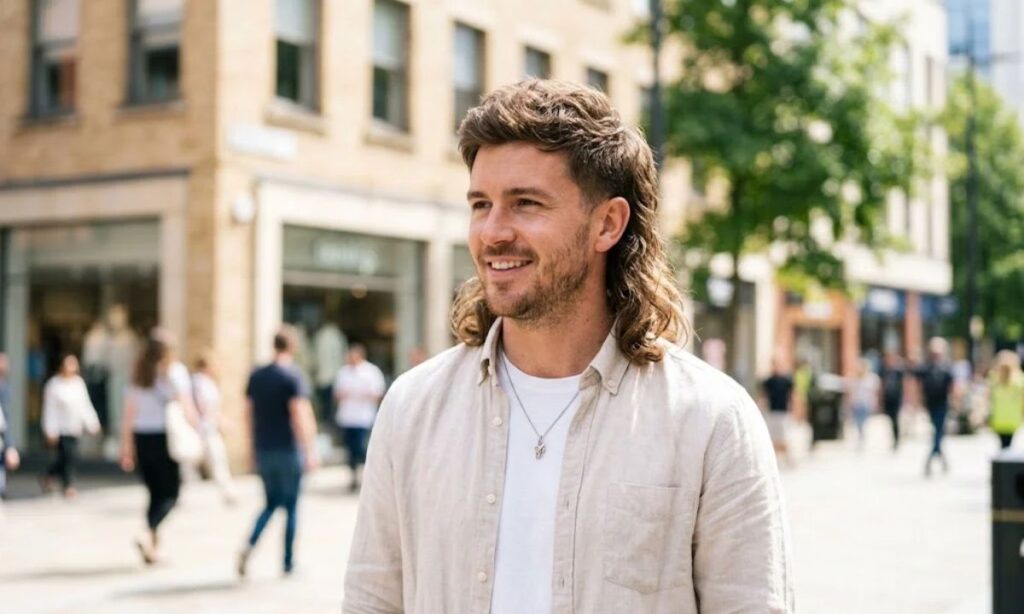
1. Modern 80s Mullet
The mullet is short at the front and sides and longer at the back. The 80s original was often extreme. The modern version blends the lengths so it looks intentional rather than accidental.
Why it works today:
- The back length is moderate, not past the shoulders.
- Soft layering removes the harsh step between sections.
- Natural texture looks better than heavy product.
Best for: oval and square faces, wavy or straight hair.
Try on Modern 80s Mullet before committing. The back length changes the whole look.
2. Textured 80s Pompadour
The pompadour is swept upward and back, with volume at the front. In the 80s it was high and glossy. Today’s version is lower and matte, with visible texture.
How to style it:
- Towel-dry hair until it’s damp.
- Apply a volumizing mousse or sea salt spray.
- Blow-dry upward with a round brush.
- Finish with a small amount of clay or paste.
Best for: round and oval faces, since the height lengthens the face.
Try an 80s Pompadour to check how much height suits you.
3. Flat Top
The flat top is cut so the hair on top forms a level, boxy plane, with short tapered sides. Athletes and military-influenced fashion made it popular, and it has a sharp, geometric look.
What to know:
- It needs a trim every 2 to 3 weeks to keep its edges crisp.
- It works best on thick, straight, or coarse hair.
- A firm wax or pomade holds the shape.
Best for: oval and long faces.
Try on Flat Top to see whether the angles flatter your jawline.
4. Feathered Layers
Feathered layers are soft, layered hair swept away from the face, usually with a side or center part. This is one of the most wearable 80s men’s hairstyles because it looks relaxed and natural.
Why people love it:
- Low maintenance and quick to dry.
- Works with most face shapes.
- Adds movement to fine hair.
Try on Feathered Layers if you want a retro hint without a dramatic change.
5. Glossy Curls
Curls were a major part of 80s men’s hairstyles, whether natural or permed. The signature was shine and definition, not frizz.
Care tips:
- Use a moisturizing, sulfate-free shampoo.
- Apply a curl cream or light gel to wet hair.
- Let it air-dry or use a diffuser.
- Don’t brush dry curls, as it breaks up the pattern.
Try on Glossy Curls to preview the volume before you buy products.
6. High-Top Fade
The high-top fade rises tall and flat or rounded on top, with sides faded down to the skin. It was a defining look in 80s hip-hop and street culture, and it remains one of the strongest statements in men’s hair.
Key points:
- Needs a skilled barber for clean fades.
- Works best on coily or tightly curled hair.
- Regular edge-ups keep the shape sharp.
Try on High-Top Fade and compare different heights.
7. Rocker Curly Shag
This is a messy, layered, curly cut. It’s long on top, with face-framing pieces and an undone finish. Rock musicians made it iconic, and it’s still popular because it looks effortless.
Styling tips:
- Use texturizing spray for grip.
- Scrunch rather than comb.
- Leave some flyaways. They’re part of the look.
Try on Rocker Curly Shag to see how your natural wave handles the layers.
8. New Wave Bowl Cut
The new wave bowl cut is a rounded, fringe-heavy style with a clean, graphic outline. It came from the post-punk and synth-pop scene. A modern version keeps the fringe lighter and the ends textured.
Best for: straight or fine hair and angular faces.
Try on New Wave Bowl Cut since the fringe length matters a lot here.
Face Shape Guide
Matching the cut to your face shape is the fastest way to get a flattering result.
| Face Shape | Recommended 80s Style | What to Avoid |
| Oval | Almost any style | Very little to avoid |
| Round | Pompadour, flat top | Bowl cut, wide curls |
| Square | Mullet, feathered layers | Extremely boxy flat top |
| Long | Bowl cut, curly shag | Very tall high-tops |
| Heart | Feathered layers, curls | Heavy volume on top |
80s Hairstyles Male Names: A Quick Glossary

Knowing the right terms helps you describe what you want:
- Mullet: short front and sides, long back.
- Pompadour: hair swept up and back with height at the front.
- Flat top: level top with tapered sides.
- Rat tail: a thin strand grown long at the nape, now rare.
- Jheri curl: a chemically relaxed, glossy curl.
- Spiky top: short hair styled upward with gel.
- Undercut: shaved or very short sides with longer hair on top.
Iconic Haircuts
Hair Texture and Maintenance
Your hair type decides how much effort a cut will take.
| Hair Type | Easiest Styles | Harder Styles |
| Fine and straight | Bowl cut, feathered layers | Tall pompadour |
| Thick and straight | Flat top, pompadour | Soft shag |
| Wavy | Mullet, shag | Flat top |
| Curly | Glossy curls, shag | Sleek pompadour |
| Coily | High-top fade | Straight-fringe styles |
Plan for a trim every 4 to 6 weeks on most styles, and more often on fades and flat tops.
What to Tell Your Barber

Clear instructions prevent most bad haircuts. Bring photos, and use this checklist:
- Show two or three reference pictures, including one from the back.
- Say the length in numbers, such as “two inches on top.”
- Describe the sides and neckline. Ask for tapered, faded, or natural.
- Mention how you style your hair. Say whether you use a blow dryer or let it air-dry.
- Ask for a modern version. Say “softer” or “less extreme” if needed.
How to Preview the Cut in HairWow
Previewing takes only a few steps:
- Upload a well-lit, front-facing photo with no hat or glasses.
- Pick a style from the 80s collection.
- Compare two or three options side by side.
- Save your favorite and show it to your barber.
A preview won’t replace a consultation, but it does help you rule out cuts that clearly don’t suit you.
Styling Without Damaging the Hair

Many 80s men’s hairstyles relied on heat and heavy products. You can get the look without the damage.
- Use a heat protectant before blow-drying.
- Keep the dryer on medium heat.
- Pick water-based or clay products over alcohol-heavy gels.
- Wash out styling products every night.
- Condition regularly, especially if your hair is curly or colored.
Common Mistakes
- Going too extreme. A full 1985 look can seem like a costume. Modernize it.
- Ignoring your hair type. Fine hair won’t hold a tall flat top.
- Using too much product. Heavy gel looks stiff and dated.
- Skipping trims. Retro cuts rely on clean shapes.
- Copying a photo exactly. Adjust the cut to your face and hairline.
Conclusion
80s men’s hairstyles last because they have personality. Choose the version that matches your hair type and lifestyle, preview it on your own photo, and give your barber clear instructions. Done well, a retro cut looks bold without looking dated.
Frequently Asked Questions
What are the most popular 80s men’s hairstyles?
The mullet, pompadour, flat top, feathered layers, and curls were the most popular. The high-top fade and bowl cut were also widely worn.
Are 80s men’s hairstyles still in style?
Yes. Modern versions of the mullet, shag, and pompadour are common today, usually with softer edges and more natural texture.
Which 80s hairstyle is best for medium-length hair?
Feathered layers, the curly shag, and the modern mullet work best. They need enough length to create movement.
How do I style an 80s pompadour?
Blow-dry the hair upward with a round brush, then set it with a light clay or paste. Use less product than the original decade did.
Can I try 80s men’s hairstyles before cutting my hair?
Yes. Upload a front-facing photo to a virtual try-on tool like HairWow to preview each style first.
What is the easiest 80s men’s hairstyle to maintain?
Feathered layers and the new wave bowl cut are the easiest. Both need only a trim every 6 weeks or so.
How do I ask my barber for an 80s haircut?
Bring photos, state your preferred lengths in numbers, and ask for a modern version so the result looks current.
