
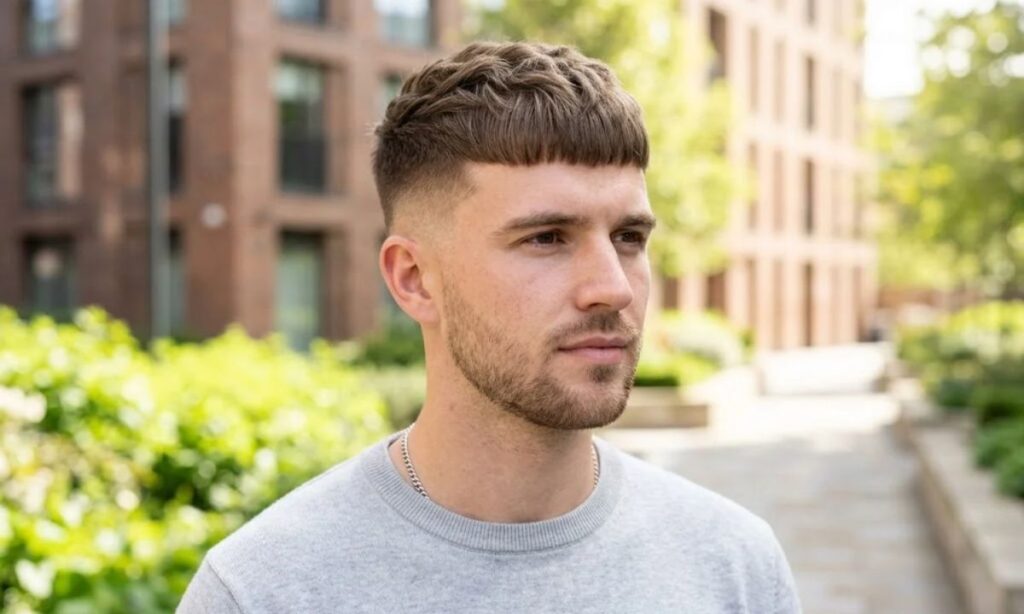
A French crop haircut is short, sharp and easy to live with. It has a cropped, textured top and a short fringe that sits straight across the forehead. The sides are usually tapered or faded. It looks clean in an office and relaxed on a weekend.
Picking the cut is the easy part. The details decide how it turns out: fringe length, fade height and how it fits your hairline. This French crop haircut guide covers each of them, so you know exactly what to ask for before you sit in the chair.
Try a French Crop Before Your Barber Visit

Not sure it will suit you? Preview it first. Upload a front-facing photo to a hairstyle try-on app, or look through photos of men with your hair type and face shape. A few minutes of this can save you from a cut you regret. More on previewing below.
You may also like French Crop Haircut
What Is a French Crop Haircut?

A French crop haircut is a short men’s style. The hair on top is cut to a short, even length and combed forward into a fringe. The sides and back are tapered or faded close to the head.
The result is a tidy shape with plenty of texture on top. It works on straight, wavy and curly hair, and it can hide a receding hairline.
Key features at a glance:
- Short, textured top
- Blunt or slightly choppy fringe
- Tapered or faded sides
- Low styling effort
- Works with or without a beard
French Crop vs Similar Haircuts
The French crop haircut gets mixed up with other short cuts. Here is how they differ.
| Haircut | Top Length | Fringe | Best For |
| French crop | Short, textured | Short, straight across | Receding lines, thick or wavy hair |
| Caesar cut | Very short, even | Short, tapered | Fine hair, minimal styling |
| Textured fringe | Medium | Longer, swept | Thick hair, a looser look |
| Buzz cut | Uniform clipper length | None | Zero upkeep |
| Ivy League | Medium, side part | Brushed to the side | Formal settings |
The French crop is a little longer and more textured than a Caesar. It is much shorter and more structured than a textured fringe.
French Crop Haircut Back
The back of a French crop haircut is cut tight and clean. Most barbers taper it into the neckline or fade it to match the sides. A blocked neckline looks sharp but shows regrowth quickly. A tapered neckline grows out more gently.
Ask to see the back in a hand mirror before you leave the chair.
Try a French Crop
If you are still deciding, try the style on your own photo first. Check the fringe line against your eyebrows and the sides against your ears. If the preview looks right in a front view and a side view, it is a good sign.
Who Does a French Crop Suit Best?

Most face shapes can pull off a French crop haircut with small adjustments.
Oval Face
Oval faces are balanced, so almost any version works. A classic French crop with a mid fade is a safe pick.
Round Face
Go for more height on top and a tighter fade on the sides. This adds length and sharpens the outline. Keep the fringe slightly textured, not blunt.
Square Face
A softer, textured fringe balances a strong jawline. A low taper keeps the look natural.
Long Face
Keep the fringe a bit lower and avoid too much height. A shorter, fuller fringe makes the forehead look shorter.
Heart or Triangle Face
A slightly longer fringe helps balance a wider forehead. Keep the sides tapered, not too tight.
Hair Type Checks Before You Ask for a French Crop
Your hair type shapes the final result. Check these before booking.
- Thick hair: Holds the shape well. Ask your barber to remove bulk so the top does not puff up.
- Fine hair: Needs a lighter hand. Too much thinning makes the top look see-through.
- Wavy hair: Gives natural texture. Expect a softer fringe.
- Curly hair: Works well when cut short. Ask for a curly French crop with a skin or low fade.
- Cowlick at the front: Tell your barber. It can push the fringe up instead of forward.
Hairline and Forehead Checks
The fringe frames your forehead, so look at your hairline first.
- Receding hairline: The forward fringe covers it well.
- High forehead: A fringe that sits lower can balance it.
- Widow’s peak: A slightly textured fringe softens the point.
- Uneven hairline: Ask for a choppy, non-blunt edge to hide the difference.
Fade Height: Low, Mid, High, or Scissor Taper?

The fade changes the whole mood of a French crop haircut.
| Fade Type | Look | Maintenance |
| Low taper | Soft, classic | Every 4–5 weeks |
| Mid fade | Balanced, modern | Every 3–4 weeks |
| High fade | Bold, sharp | Every 2–3 weeks |
| Scissor taper | Natural, no clipper line | Every 4–6 weeks |
Low Taper French Crop
A low taper starts just above the ears and follows the neckline. It is subtle and works well for office settings.
Mid Fade French Crop
A mid fade starts around the temples. It is the most popular choice because it suits nearly everyone.
High Fade French Crop
A high fade starts near the crown. It creates strong contrast with the top, but it needs frequent upkeep.
Scissor Taper French Crop
A scissor taper blends the sides with scissors, not clippers. It is a good choice for a softer, less defined look.
Fringe Length: The Detail That Changes Everything
Fringe length is where most people go wrong. A French crop fringe usually sits about one finger-width above the eyebrows.
- Too short: Looks harsh and exposes the forehead.
- Just right: Frames the face and still looks clean.
- Too long: Starts to look like a different cut.
If you are unsure, start longer. A barber can always cut more, but cannot add length back.
How to Preview a French Crop Before the Barber

- Save two or three photos of men with your hair type.
- Pick one with a similar hairline.
- Try the style in a virtual try-on tool.
- Check front and side views.
- Show the photos to your barber.
Short Fringe Styles
Try a Shorter Fringe
Want to test a bolder look? Preview a shorter fringe on your photo before committing. If it looks too severe, go for a French crop haircut with a slightly longer fringe.
What to Ask Your Barber For
Be specific. Vague requests lead to surprises. Try something like this:
“I’d like a French crop with a mid fade. Keep the top textured, and cut the fringe about a finger above my eyebrows.”
Also mention:
- Your preferred fade height
- How much length you want to keep on top
- Whether you want a blocked or tapered neckline
- Your normal styling routine
Common French Crop Mistakes
Mistake 1: Asking for a Fringe That Is Too Short
A fringe that is too short can look like a bowl cut gone wrong. Keep it above the eyebrows, not halfway up the forehead.
Mistake 2: Choosing the Fade Before the Fringe
Decide on the fringe first. The fade should support it, not compete with it.
Mistake 3: Over-Thinning Fine Hair
Too much thinning leaves fine hair flat and patchy. Ask for texture instead of heavy thinning.
Mistake 4: Ignoring Growth Direction
Hair grows in set patterns. If your crown swirls, a forward fringe may not lie flat. A good barber will cut with the grain.
Mistake 5: Styling It Like a Slick Cut
A French crop haircut is meant to look textured, not slicked back. Heavy gel and a comb-over work against the shape.
French Crop Haircut Black Men

A French crop haircut works very well on Black men with coily or curly hair. A low or skin fade keeps the sides sharp, and the short top shows off natural texture.
Tips for coily hair:
- Moisturise daily so the top stays soft, not dry.
- Ask for a clean line-up for a crisp finish.
- Use a soft brush to define the curls.
- Sleep with a satin cap or pillowcase.
Styling and Maintenance
A French crop haircut takes about two minutes to style.
- Towel-dry your hair until slightly damp.
- Apply a pea-sized amount of matte clay or paste.
- Rub it between your palms.
- Work it through the top from back to front.
- Pull the fringe forward and shape it with your fingers.
Maintenance schedule:
- Weeks 1–3: Looks sharp, minimal effort.
- Weeks 3–4: Fade starts to grow out. Book a tidy-up.
- Weeks 5–6: Fringe gets long and loses shape.
Wash with a mild shampoo two or three times a week. Use a light conditioner to keep the texture soft.
Classic French Crop
Short, even top with a straight fringe. Clean and timeless.
Textured French Crop
Choppy layers on top for extra movement. Best for thick or wavy hair.
French Crop Fade
A French crop haircut paired with a skin or low fade. Sharp and modern.
Messy French Crop
A relaxed version with a tousled fringe. Ideal for casual days.
Short French Crop
An extra-short top for very low maintenance. Works best with a strong jawline.
French Crop With Beard
A short, neat beard goes well with a French crop. Fade the beard into the sideburns for a smooth blend.
FAQs
How long should hair be for a French crop haircut?
You need about 2–3 cm (1 inch) on top so your barber can shape the fringe and texture.
Does a French crop suit thin hair?
Yes, it adds structure to fine hair. Just avoid heavy thinning.
Is a French crop haircut good for a receding hairline?
Yes. The forward fringe covers the temples and makes the hairline look fuller.
What product is best for a French crop?
A matte clay or paste gives texture without shine.
How often should I trim a French crop haircut?
Every 3–5 weeks keeps the fringe and fade looking sharp.
Can I get a French crop with curly hair?
Yes. Short curls give the style natural texture. Ask for a low or skin fade.
