
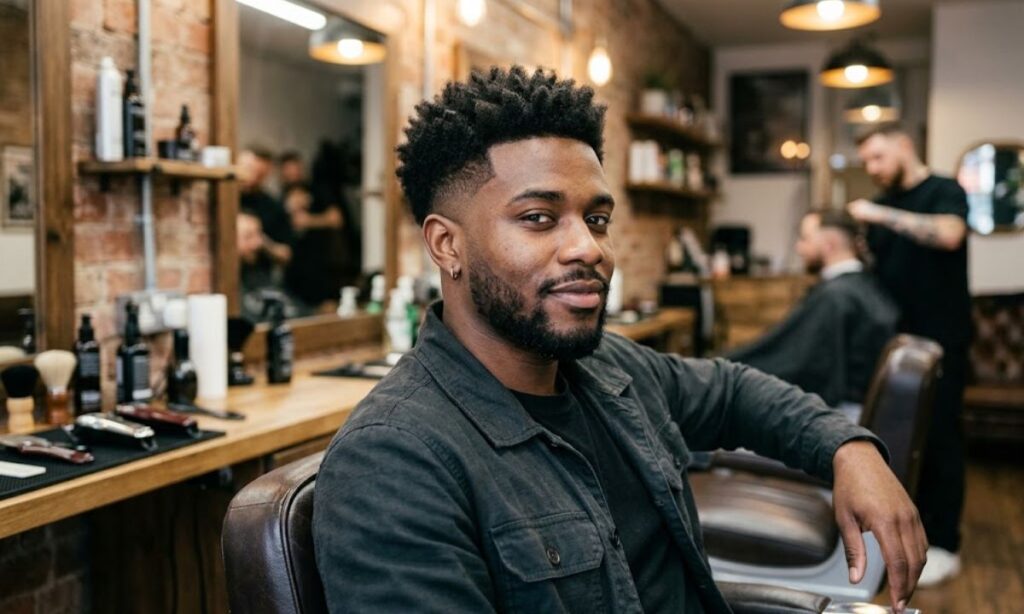
If you’re hunting for a haircut that feels fresh, sharp, and genuinely on-trend, burst fade haircuts for men deserve the top spot on your list for 2026. This style has moved from niche barbershop request to mainstream favorite because it works with nearly every hair type, blends cleanly into countless top styles, and photographs as well in person as it does on Instagram. In this guide, you’ll get a full breakdown of what makes a burst fade different from other fades, the most popular variations men are asking for right now, how to style and maintain the cut at home, and how to pick the right version for your face shape and hair texture.
Understanding the Burst Fade

A burst fade is a fading technique where the hair around the ear tapers in a curved, semi-circular shape instead of running straight down the side of the head. Rather than a flat, linear drop, the fade “bursts” outward around the ear and sideburn area, then blends smoothly into longer hair on top and at the back. That rounded shape is exactly where the name comes from.
Unlike a drop fade, which lowers behind the ear in a soft diagonal line, or a taper fade, which fades gradually from top to bottom with no strong curve, the burst fade concentrates its shortest length right at the ear and radiates outward. The result is a haircut with more visual movement and a bolder, more sculpted silhouette.
Burst Fade Haircuts
The Anatomy of a Burst Fade

Every well-executed burst fade shares a few core features:
- A curved fade line that wraps around the ear instead of cutting straight down
- Skin-close or near-skin length at the point closest to the ear
- Longer length retained at the back and nape, which gives the “burst” its signature look
- A smooth gradient blending short sides into a fuller top
The Curved Fade Pattern

The curved pattern is what separates this cut from every other fade style. Instead of one continuous line running from the sideburn to the neckline, the barber shapes the fade in an arc that hugs the natural curve of the ear. This curved fade pattern is why the cut suits round, square, oval, and diamond face shapes so well — the rounded line softens harder angles and adds proportion where it’s needed.
The Graduation Effect

Graduation refers to how quickly (or slowly) the hair transitions from short to long. A tight graduation creates a crisp, high-contrast look, while a looser graduation gives a softer, more blended finish. Barbers typically adjust the graduation effect based on hair density and the client’s preferred level of boldness — thicker hair often handles a tighter graduation better, while fine hair can look more natural with a gradual blend.
Popular Burst Fade Variations

One reason burst fade haircuts remain so popular in 2026 is the sheer number of ways the cut can be customized. Below are the variations men are requesting most at barbershops right now.
Burst Fade Mullet

The burst fade mullet pairs short, curved sides with noticeably longer hair at the back, creating that classic “business at the sides, party at the back” contrast. It works especially well with straight or wavy hair and gives a bold, retro-modern edge that’s easy to spot from across the room. This variation suits men who want a statement cut without going full mohawk.
High Burst Fade

A high burst fade starts the taper much higher on the head, creating maximum contrast between the skin-close sides and the fuller top. It’s a dramatic, attention-grabbing option that pairs well with a pompadour, textured crop, or slicked-back top. Because the fade line sits higher, it also tends to need more frequent touch-ups to stay sharp.
Mid Burst Fade

The mid burst fade strikes a balance between bold and subtle. The fade begins around the temple area, offering noticeable contrast without the intensity of a high fade. It’s a versatile, low-risk choice that works in both professional and casual settings, and it’s often recommended for men trying a burst fade for the first time.
Low Burst Fade

A low burst fade keeps the transition close to the ears and hairline, giving a softer, more understated result. It’s ideal for workplaces with conservative dress codes, and it grows out more gracefully than higher variations since there’s less contrast to maintain. Men with thick or wavy hair often find the low burst fade easiest to manage day to day.
| Burst Fade Type | Contrast Level | Maintenance Frequency | Best For |
| High Burst Fade | Very high | Every 2–3 weeks | Bold, statement looks |
| Mid Burst Fade | Moderate | Every 3–4 weeks | Everyday versatility |
| Low Burst Fade | Subtle | Every 4–5 weeks | Office-friendly, low-fuss styles |
Styling Your Burst Fade

A great fade is only half the job — how you style the top determines whether the haircut looks polished or falls flat. Here’s what to know about keeping a burst fade looking sharp between barber visits.
Essential Styling Products

The right product depends on your hair type and the finish you’re after:
- Matte clay or paste — best for textured, natural-looking finishes with strong hold
- Pomade — ideal for sleek, shiny looks like slick-backs or pompadours
- Sea salt spray — adds texture and volume to wavy or straight hair
- Curl cream — defines curls without weighing them down
- Texture powder — boosts root lift and adds grip for fine hair
Daily Styling Techniques

For most burst fade variations, start with damp (not soaking wet) hair. Apply a small amount of product evenly through the top section, then use your fingers or a vent brush to shape the hair in the direction you want — forward for a fringe, upward for volume, or back for a slicked finish. Avoid piling on product near the fade line itself, since heavy buildup there can make the sides look dull or greasy rather than crisp.
Long-Term Maintenance

Because the burst fade relies on a defined line around the ear, regular trims matter more here than with a basic taper. Most barbers recommend a touch-up every two to four weeks depending on how high the fade sits and how fast your hair grows. Between visits, keep the sides clean with light trims if needed, and avoid over-washing, since stripping natural oils can leave the top looking flat and dry.
Choosing the Right Burst Fade for Your Face Shape
Because the curved line softens or sharpens different areas of the face, picking the right variation matters as much as picking the right top style.
- Round faces — a high burst fade with added height on top helps elongate the face
- Square faces — the rounded arc of a mid or low burst fade softens a strong jawline
- Oval faces — nearly any burst fade variation works well, since the proportions are already balanced
- Diamond faces — a burst fade with volume at the crown adds width where the face narrows
Hair type plays an equally important role. Curly and coily hair tend to hold the curved shape of the fade especially well and pair beautifully with textured crops or curly tops. Straight hair shows off the clean fade line with sharp precision, making it a strong match for slick-backs, quiffs, and classic taper styles. Thick hair can carry bolder graduation, while fine hair often looks best with a softer, low-contrast blend.
Burst Fade Haircut Guide: Face Shapes, Hair Types & Advanced Styling Tips
Picking a burst fade haircut is easy. Picking the right burst fade haircut for your face shape, hair texture, and lifestyle takes a bit more thought. This guide breaks down exactly how to adapt the cut for round, square, and oval faces, how it performs on straight, wavy, and curly hair, and how to level it up with line designs and custom patterns. You’ll also get practical, barber-tested tips on communication, finding the right stylist, and building a maintenance schedule that keeps the fade looking sharp week after week.
Round Face Considerations

Round faces have soft, curved edges and roughly equal width and length. The goal with a burst fade haircut here is to add height and create the illusion of length, rather than adding more roundness with a low, wide silhouette.
A high burst fade works particularly well because it draws the eye upward and elongates the overall shape of the head. Pairing it with volume on top — a quiff, textured crop, or short pompadour — reinforces that vertical line. Avoid excessive width at the crown or overly rounded top styles, since these can make a round face look wider than it is.
Quick tips for round faces:
- Choose a high or mid burst fade over a low one
- Add height on top rather than width
- Keep the sides tight to sharpen the jawline visually
- Avoid heavy fringe styles that add horizontal weight
Square Face Adaptations

A square face shape has a strong, angular jawline and a broad forehead. The curved fade line of a burst fade is naturally flattering here, since it softens those sharp angles without hiding them completely.
A low or mid burst fade tends to work best for square faces because it keeps the contrast gentle and lets the natural jaw structure stand out. Textured tops with some movement — like a messy crop or a loosely styled quiff — complement the strong bone structure without overwhelming it. Very high, sharply defined fades can sometimes emphasize angularity too much, so most barbers recommend dialing back the contrast slightly for this face shape.
Oval Face Options

Oval faces are considered the most balanced shape, which means they can carry nearly any burst fade variation without much adjustment. This is the one face shape where personal style, hair type, and lifestyle should drive the decision more than corrective styling.
Men with oval faces can experiment freely with high burst fades, burst fade mullets, or even bolder designs like line work, since there’s no strong angle or proportion that needs correcting. The main consideration becomes hair density and how much daily styling time you’re willing to commit to.
| Face Shape | Recommended Fade Height | Top Style Focus |
| Round | High burst fade | Add height, avoid width |
| Square | Low to mid burst fade | Soften angles, add texture |
| Oval | Any variation | Personal preference, minimal restriction |
Burst Fade with Different Hair Types

Hair texture changes how a burst fade looks, how long it holds its shape, and how it should be styled day to day.
Straight Hair Applications

Straight hair shows off the clean, curved line of a burst fade with exceptional precision, since there’s no natural texture disrupting the transition. This makes straight hair ideal for sharp, high-contrast fades and sleek top styles like slick-backs or classic side parts. The trade-off is that straight hair can look flat without product, so a light pomade or texturizing spray is usually necessary to add movement on top.
Wavy Hair Techniques

Wavy hair adds natural texture and volume, which pairs especially well with mid or low burst fades. The slight movement in wavy hair helps the top blend more organically into the fade, reducing the need for heavy styling. A sea salt spray or light mousse can enhance the wave pattern without weighing the hair down, giving a relaxed, effortless finish.
Modern Guide
Curly Hair Strategies

Curly hair holds shape and volume better than any other texture, making it a strong match for burst fade haircuts that lean into bold contrast. The curls create natural definition on top, so the fade only needs to handle the sides and back cleanly. Curl-defining cream applied to damp hair helps maintain curl pattern and prevents frizz, while avoiding brushes (which can disrupt curl clumps) keeps the top looking intentional rather than messy.
Advanced Burst Fade Designs

Once you’re comfortable with the basic burst fade, there are several ways to push the style further with added detail and personalization.
Line Designs
A single shaved line, or a set of parallel lines, can be added along the fade’s curved edge for extra sharpness and visual interest. Line designs work best on straight or wavy hair, where the contrast between the line and surrounding hair stays crisp for longer. This detail requires more frequent touch-ups than a standard fade, since even slight regrowth can blur the line.
V-Cut Variations

A V-cut design at the nape adds a distinctive point at the back of the neckline, giving the burst fade a more sculpted, tailored finish. It’s a subtle but noticeable upgrade that works well with burst fade mullets and longer top styles, since the added definition at the back balances the extra length up top.
Custom Pattern Integration
For men who want a truly personalized look, custom patterns — initials, geometric shapes, or freehand designs — can be razored directly into the fade. This level of detail takes a skilled barber and significantly more chair time, so it’s best reserved for special occasions or for those committed to frequent maintenance appointments.
Professional Tips for Burst Fade Success

A great burst fade depends as much on communication and barber selection as it does on the cut itself.
Communicating with Your Barber
Bring reference photos and be specific about the details that matter most to you: fade height, how curved you want the line around the ear, and how much length to leave on top. Mentioning your hair type and how much time you’re willing to spend styling daily also helps your barber recommend a version that fits your routine, not just the photo you brought in.
Choosing the Right Barber
Not every barber has equal experience with curved, radial fade work — it requires more precision than a standard straight-line taper. Look for a barber whose portfolio specifically features burst fades, ask how they handle curved blending, and don’t hesitate to book a consultation before committing to a first appointment.
Maintenance Schedule Planning
Burst fades lose their sharp definition faster than looser fade styles, so planning your maintenance schedule in advance keeps the cut looking fresh:
- High burst fades — book every 2–3 weeks
- Mid burst fades — book every 3–4 weeks
- Low burst fades — book every 4–5 weeks
- Designs or line work — book every 1–2 weeks to prevent blurring
Frequently Asked Questions
What is a burst fade haircut?
A burst fade is a men’s haircut where the sides taper in a curved, semi-circular shape around the ear instead of a straight line, blending into longer hair on top.
What’s the difference between a burst fade and a regular fade?
A regular fade fades straight down the side of the head, while a burst fade curves around the ear for a rounder, more dramatic shape.
How long does a burst fade last?
A burst fade typically stays sharp for 2 to 4 weeks before it needs a touch-up, depending on how high the fade sits.
Is a burst fade good for curly hair?
Yes, curly hair pairs especially well with a burst fade because the natural texture on top contrasts nicely with the clean, curved sides.
What should I ask my barber for a burst fade?
Ask for a “curved fade around the ear” and specify your preferred height — low, mid, or high — along with how much length to leave on top.
Does a burst fade work for a receding hairline?
Yes, a burst fade can work well with a receding hairline, especially when paired with a shorter top style like a crop or buzz.
What face shape suits a burst fade the most?
Round and square face shapes benefit the most, since the curved fade line softens angles and adds visual balance.
Conclusion
The burst fade has earned its spot as one of the best men’s haircuts of 2026. It works with almost any hair type. It flatters most face shapes with ease. And it never goes out of style.
Choosing the right version matters most. A high fade adds bold contrast. A low fade keeps things simple and clean. Either way, you get a sharp, modern look.
Talk to your barber before your next visit. Bring a photo and explain your hair type. Small details make a big difference. A great burst fade is worth the conversation.
