
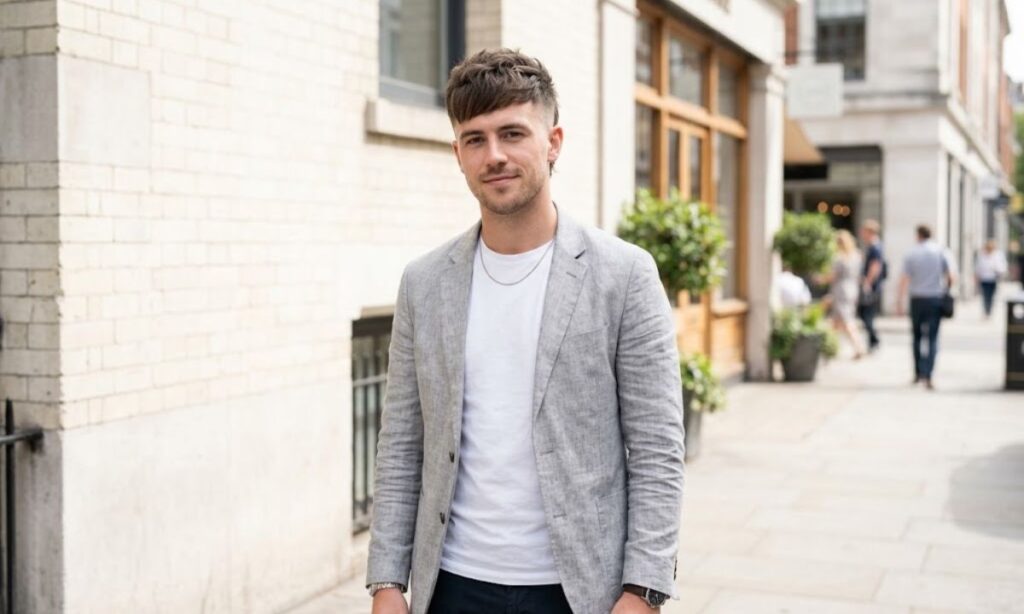
If you’re tired of the same old fade or crew cut, the reverse mullet haircut might be exactly the bold change you’re looking for. Unlike the traditional “business at the front, party at the back” mullet, this modern twist flips the entire concept — delivering longer hair up front and a shorter, cleaner back.
It’s edgy, versatile, and quickly becoming one of the most searched men’s hairstyles.
In this guide, we’ll break down everything you need to know about the reverse mullet haircut — from what it actually is, to the best variations for men, kids, and even women, plus expert styling tips to help you rock this look with confidence.
What Is a Reverse Mullet?

A reverse mullet, sometimes called an inverted mullet, flips the classic mullet silhouette on its head. Instead of short front and sides with a long tail at the back, this haircut keeps the front and top sections longer while the back and nape are cut noticeably shorter — often with a fade, taper, or clean buzz.
The result is a striking contrast that frames the face while keeping the back low-maintenance. It’s a fresh, statement-making alternative to the traditional mullet, and it works beautifully across straight, wavy, and curly hair textures.
Reverse Mullet Haircut
Why Is the Reverse Mullet Trending in 2026?

Several factors are driving the reverse mullet’s rise in popularity this year:
- Social media momentum – Barbers on TikTok, Instagram, and Pinterest are showcasing dramatic before-and-after transformations, fueling viral interest.
- Low back maintenance – A shorter back means fewer trims to keep the shape sharp.
- High customization – It pairs easily with fades, curls, layers, and bangs, so no two cuts look identical.
- Bold individuality – In a sea of predictable haircuts, the reverse mullet stands out as a genuine style statement.
- Celebrity and athlete influence – Public figures experimenting with unconventional cuts have normalized this once-niche look.
Reverse Mullet Haircut Viking
The Viking-inspired reverse mullet combines rugged, textured length at the front with a tightly shaved or faded back — echoing warrior-era hairstyles reimagined for modern grooming. It’s often paired with a full beard and slightly undercut sides, giving a fierce, masculine silhouette that pairs power with personality.
Key Benefits of a Reverse Mullet
| Benefit | Why It Matters |
| Unique silhouette | Instantly distinguishes you from common haircuts |
| Low back upkeep | Short back needs fewer barber visits |
| Versatile styling | Works with fades, curls, waves, and bangs |
| Face-framing effect | Longer front hair softens or sharpens facial features |
| Suitable for all hair types | Adapts to straight, curly, wavy, and thick hair |
Popular Reverse Mullet Styles
Classic Reverse Mullet

The classic version keeps things balanced — moderately long front hair combed forward or styled with texture, and a short, even back. It’s the most wearable variation for everyday, workplace-friendly settings.
Textured Reverse Mullet

This style uses point-cutting and layering to create movement and volume up top. A textured finish adds a messy, effortless vibe that looks great with light styling products like matte clay or texturizing spray.
Reverse Mullet Fade

Combining a skin fade or taper at the back and sides with longer length at the crown, the reverse mullet fade delivers maximum contrast. It’s ideal for men who want a sharp, barbershop-precise finish.
Curly Reverse Mullet

Natural curls add extra dimension to the front section, while the back is kept short to avoid bulk. This variation is especially popular among men with textured or coily hair types looking for a low-maintenance yet expressive cut.
Reverse Mullet Haircut Kids

A softer, shorter version works well for boys — typically with subtle length at the front and a neat, short back. It’s practical for school and easy for parents to maintain between trims.
Reverse Mullet Haircut Girl

For girls and women, the reverse mullet often incorporates soft layers, curtain bangs, or wispy front pieces, paired with a shorter nape. It offers a chic, androgynous edge that’s gaining traction as a gender-fluid hairstyle choice.
Trendy Reverse Mullet for Men
Long Reverse Mullet

This bold variation maximizes front length, creating dramatic contrast against the short back. It works especially well on straight and wavy hair for a flowing, statement-making finish.
Short Reverse Mullet
A subtler take, the short reverse mullet keeps front length minimal while still maintaining the signature short-back structure. It’s a great entry point for first-timers.
Wavy Reverse Mullet

Natural or styled waves add texture and dimension to the front section, giving a relaxed, beach-inspired feel that pairs nicely with a tapered back.
Shaggy Reverse Mullet
Inspired by the shag haircut, this version layers the front for a choppy, tousled look while the back stays cropped short — perfect for a lived-in, low-effort aesthetic.
Reverse Mullet with Bangs

Adding blunt or wispy bangs to the front creates a distinctive frame around the face, often favored by men and women wanting an edgier, fashion-forward silhouette.
Undercut Reverse Mullet
This variation pairs a hard undercut at the back and sides with noticeably longer top and front sections, producing an ultra-sharp, high-contrast look.
Modern Reverse Mullet

The modern reverse mullet blends clean fades, subtle layering, and polished styling — a refined version suited for men who want the trend without looking overly dramatic.
Layered Reverse Mullet
Multiple layers throughout the front and crown add volume and movement, making this style ideal for thicker hair types that need texture to avoid looking flat.
Reverse Mullet for Straight Hair

Straight hair showcases the reverse mullet’s clean lines beautifully. The front can be styled sleek and forward, or slightly tousled, while the short back stays crisp and defined.
How to Ask Your Barber for a Reverse Mullet
- Bring reference photos showing the exact front length and back fade you want.
- Specify your preferred back finish — skin fade, taper, or buzz.
- Decide on front length: chin-grazing, eyebrow-length, or shorter.
- Mention your hair type (curly, straight, wavy) so your barber can adjust technique.
- Ask about maintenance tips and recommended styling products.
Styling Tips for a Reverse Mullet

- Use a lightweight matte paste for textured, natural movement.
- Blow-dry front sections forward or to the side for added volume.
- Trim the back every 3–4 weeks to keep the fade sharp.
- Pair with a beard or stubble for extra contrast and definition.
- Experiment with side partings to change up your everyday look.
Reverse Mullet for Thick Hair
Thick hair is practically tailor-made for a reverse mullet. The natural density adds fullness to the longer front section without extra product, while the shorter back keeps things from feeling heavy or bulky.
- Ask your barber to add layers through the crown to remove excess weight.
- Texture helps prevent the front from looking like a solid block.
- Works especially well with taper fades to balance the volume up top.
Reverse Mullet for Fine Hair

Fine hair needs a different approach. Since there’s less natural volume, the goal is to create the illusion of thickness through smart layering and texturizing techniques.
- Shorter layers near the crown help fine hair appear fuller.
- Avoid overly long front sections, which can look thin and stringy.
- A light texturizing spray adds grip and lift without weighing hair down.
Reverse Mullet with Taper Fade
Pairing the reverse mullet with a taper fade creates a smooth, gradual transition from the short back and sides into the longer front section. It’s a versatile, barbershop-friendly finish that suits nearly every face shape and works equally well for casual and professional settings.
Punk Reverse Mullet

The punk reverse mullet leans into rebellious, high-contrast energy — think choppy front layers, razored ends, and often a shaved or buzzed back. It pairs naturally with bold hair color and edgy styling for maximum visual impact.
Ideas for Men
Messy Reverse Mullet
This relaxed, undone variation embraces natural texture rather than fighting it. A little sea-salt spray and air-drying is often all it takes to achieve the tousled, lived-in finish that defines the messy reverse mullet.
Reverse Mullet with Highlights

Adding highlights to the front section draws even more attention to the haircut’s signature contrast. Face-framing balayage or subtle babylights are especially popular choices for enhancing dimension without overwhelming the style.
Asian Reverse Mullet
Naturally thick, straight hair textures common among many Asian hair types create a sleek, sharply defined reverse mullet with minimal effort. The front sits cleanly forward, while the back stays crisp with a fade or undercut for structured contrast.
Reverse Mullet Wolf Cut

A fusion of the shaggy wolf cut and the reverse mullet, this style combines heavily layered, textured length at the front with a cropped back. It’s ideal for those wanting a bold, editorial-inspired look with maximum movement.
Reverse Mullet with Curtain Bangs
Curtain bangs split softly down the middle and frame the face, adding a romantic, face-flattering element to the reverse mullet. This combination works beautifully for oval and heart-shaped faces.
Edgy Reverse Mullet

For those chasing a fashion-forward statement, the edgy reverse mullet combines sharp fades, disconnected layers, and sometimes shaved design lines for a genuinely one-of-a-kind finish.
Colored Reverse Mullet
Bold color choices — from platinum blonde to vivid reds and blues — amplify the reverse mullet’s dramatic front-to-back contrast, making the silhouette even more eye-catching.
Reverse Mullet with Soft Layers

A gentler alternative to heavily textured versions, soft layers add subtle movement and shape without harsh lines, resulting in a polished yet effortless everyday look.
Reverse Mullet Style Comparison
| Style | Best Hair Type | Maintenance Level |
| Taper Fade | Thick, straight, wavy | Medium |
| Punk | Any (with color) | Medium-High |
| Messy | Wavy, curly | Low |
| Wolf Cut | Thick, wavy | Medium |
| Curtain Bangs | Fine, straight, wavy | Medium |
| Soft Layers | Fine, thin | Low |
Does a Reverse Mullet Work with Curly Hair?
Yes, curly hair pairs exceptionally well with a reverse mullet. The natural curl pattern adds shape and volume to the front section, while a shorter back reduces overall bulk and keeps the silhouette balanced. Layering is often recommended to prevent curls from forming an overly triangular shape at the crown.
How to Style a Reverse Mullet
Getting the most out of your reverse mullet comes down to a few consistent styling habits.
Use a Texturizing Product
A matte paste, texturizing spray, or sea-salt spray helps define individual pieces, adds grip, and prevents the front section from looking flat or overly polished.
Add Volume
Blow-drying with your fingers while lifting hair at the roots creates natural lift and fullness, especially helpful for fine or straight hair types that need extra body.
Maintain Regular Trims
Even though the reverse mullet is relatively low-maintenance, trimming the back every 4–6 weeks keeps the fade sharp and prevents the overall shape from losing its contrast.
Quick Styling Checklist
- Apply heat protectant before blow-drying.
- Dry the front section forward or to the side using a round brush.
- Add a small amount of texturizing product, working from mid-lengths to ends.
- Use fingers (not a comb) for a natural, undone finish.
- Finish with light-hold hairspray if needed.
Frequently Asked Questions
What is a reverse mullet haircut?
A reverse mullet is a haircut with longer hair at the front and top, and a short, clean back — the opposite of a traditional mullet.
Is the reverse mullet haircut still popular?
Yes, the reverse mullet remains one of the most searched men’s hairstyles in 2026, driven largely by TikTok and Instagram trends.
How do I ask my barber for a reverse mullet?
Show reference photos and ask for a short faded back with a longer front section, layered through the crown for smooth transition.
Does a reverse mullet work for straight hair?
Yes, straight hair highlights the reverse mullet’s clean lines, giving it a sleek, defined front-to-back contrast.
How often should you trim a reverse mullet?
Most people trim the back every 4 to 6 weeks to keep the fade sharp while letting the front grow out.
What face shapes suit a reverse mullet?
The reverse mullet suits most face shapes, including oval, round, square, and heart-shaped, since front length can be adjusted to flatter each one.
Can I style a reverse mullet at home?
Yes, with short hair around 2–4 inches you can trim a basic reverse mullet at home, though a barber gives a more precise, polished finish.
Conclusion
The reverse mullet haircut is more than a trend. It stands out because it breaks the rules. Long hair up front. Short hair in the back. It’s simple, but it makes a real statement.
This cut works for almost anyone. Straight hair, curly hair, thick or fine — it adapts. You can keep it clean and classic. Or make it bold with color and texture. Either way, it feels personal to you.
If you want a fresh look in 2026, this is worth trying. It’s easy to maintain. It grows out gracefully. And it always turns heads. The reverse mullet isn’t going anywhere soon.
