
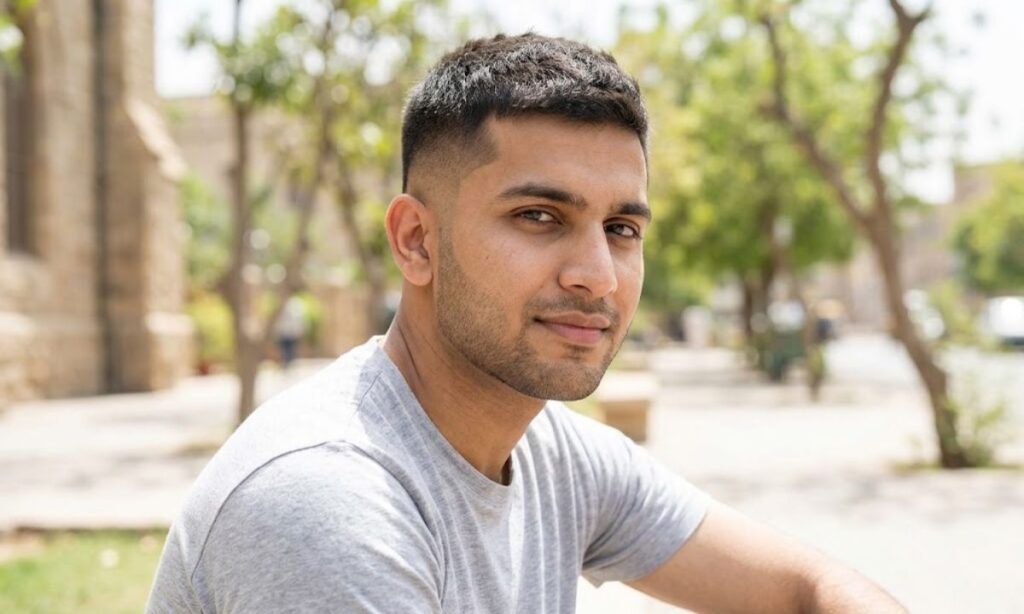
If you’ve scrolled past a barbershop window lately, chances are you’ve spotted a low drop fade on at least three heads. It’s not hype , it’s one of the few fades that works on almost every hair type, face shape, and age group without looking forced.
Unlike a high fade that screams “fresh cut,” the low drop fade curves gently behind the ear and settles low at the nape, giving you sharp contrast without losing that natural, easygoing finish.
This guide breaks down exactly what makes a fade “low drop,” how to pick the right version for your face shape and hair texture, and walks through 15 low drop fade haircuts that actually hold up between barber visits , not just in photos.
What Actually Makes It a “Low Drop” Fade

A drop fade gets its name from the way the fade line dips, or “drops,” as it curves around the back of the ear before leveling out at the neckline. A low drop fade keeps that curve close to the skin, starting just above the ears rather than higher up near the temple.
Here’s what separates it from other fade styles:
| Fade Type | Starting Point | Best For |
| Low drop fade | Just above the ears | Rounder crowns, flat occipital bones |
| High drop fade | Near the temple | Guys who want bolder contrast |
| Mid fade | Middle of the side head | Balanced, everyday styles |
| Skin fade | Blends to bare skin | Maximum contrast, sharp lines |
The low placement means less visible skin and a softer transition, which is exactly why it reads as “clean” rather than “cut.” It also tends to grow out more gracefully, so you’re not rushing back to the chair every ten days.
You may also like Drop Fade Haircuts
Why Face Shape Is Non-Negotiable

Not every fade shape flatters every face. Before you show your barber a photo, know where you stand:
- Round faces / a low drop fade adds height and angles, especially paired with more length on top.
- Square faces / softer, textured tops balance strong jawlines; keep the drop subtle.
- Oval faces / nearly any variation works, from a buzzed low drop fade to a longer pompadour.
- Long faces / avoid too much height on top; a side part low drop fade keeps proportions balanced.
- Heart-shaped faces / fuller sides and a lower fade line soften a narrow chin.
Skipping this step is the fastest way to leave the barbershop disappointed, even with a technically flawless haircut.
How Your Natural Hair Texture Writes the Rules
Your texture decides which of these 15 low drop fade haircuts will actually behave day to day.
- Straight hair holds sharp lines and sleek finishes well , think slicked back or side part styles.
- Wavy hair adds natural texture without much product, ideal for a textured crop.
- Curly hair needs styles that let curls breathe, like a curly low drop fade with more length on top.
- Coily hair pairs beautifully with a hard part or buzz cut low drop fade for definition.
Fighting your natural texture with heavy products only leads to a style that looks great for an hour and falls apart by noon.
Top Trending 8 Variations That Actually Survive Real Life

Trends come and go, but these low drop fade haircuts have staying power because they’re built around real hair, not styling tricks.
Textured French Crop Low Drop Fade 2026
Short, choppy fringe on top meets a clean low drop fade on the sides. It’s a favorite for 2026 because it needs almost no daily styling — just a bit of matte clay worked through damp hair.
Modern Pompadour Low Drop Fade

Volume up front, sharp fade below. This combo works especially well for straight or wavy hair and dresses up easily for formal settings.
Slicked Back Low Drop Fade for Professionals
A boardroom-ready look. Slick the top back with a light pomade and let the low drop fade do the rest of the work — polished without trying too hard.
15 Low Drop Fade Haircuts Straight Hair

Straight hair holds crisp partings and sleek finishes better than any other texture. Expect clean lines, minimal frizz, and styles that photograph well from every angle.
Curly Hair Low Drop Fade Natural Style
Instead of fighting the curl pattern, this style keeps length on top so curls can spring naturally while the sides stay tight and controlled.
Forward Swept Fringe Low Drop Fade

Fringe pushed forward toward the forehead gives a youthful, effortless vibe — a go-to for guys who want texture without much daily maintenance.
Side Part Low Drop Fade Undercut
A defined side part paired with an undercut base creates sharp structure. It’s one of the more formal takes on the low drop fade family.
Buzz Cut Low Drop Fade with Hard Part

Minimal top length, maximum precision. The hard part adds a graphic line that makes even a simple buzz cut look deliberate.
15 Low Drop Fade Haircuts Male Styles Worth Trying
Beyond the eight above, several more variations round out the full list of 15 low drop fade haircuts men are actually asking for at the chair:
- Textured quiff with low drop fade
- Comb-over low drop fade
- Mohawk fade with low drop taper
- Mullet-inspired low drop fade
- Burst low drop fade with disconnected top
- Faux hawk low drop fade
- Curtain fringe low drop fade
Medium Length Wavy Low Drop Fade

Medium-length hair on top gives waves room to move while the low drop fade keeps things tidy underneath. It’s a low-effort style that still looks intentional.
How to Speak Barber So They Don’t Ruin Your Head
Walking in and saying “fade” isn’t enough. Use this shortlist to get exactly what you want:
- Specify “low drop fade,” not just “fade,” so they know where the line starts.
- Mention your face shape or ask for their recommendation based on it.
- Bring a reference photo, even if it’s not an exact match.
- Tell them your daily styling habits / low maintenance vs. styled every day.
- Ask them to leave slightly more length if you’re unsure; it’s easier to cut more later than to add hair back.
Five-Minute Morning Routines That Don’t Lie
None of these 15 low drop fade haircuts need a 20-minute styling session. A realistic routine looks like this:
- Rinse or lightly wet hair.
- Apply a dime-sized amount of clay, paste, or texture powder depending on your style.
- Use fingers, not a comb, for textured looks; use a comb only for slicked-back or side-part styles.
- Blow-dry on low heat for 60–90 seconds if you want extra volume.
- Set with a light-hold spray if you’re heading into humidity.
The Brutal Truth About Maintenance
A low drop fade looks sharp for roughly 2–3 weeks before the line starts to soften. Here’s the honest maintenance breakdown:
| Maintenance Task | Frequency |
| Barber touch-up | Every 2–3 weeks |
| Neckline/edge cleanup at home | Weekly |
| Deep conditioning (curly/coily) | Weekly |
| Product refresh (clay, paste, powder) | Daily as needed |
If you’re not willing to visit the barber every few weeks, ask for a slightly less dramatic drop so the grow-out phase looks intentional rather than messy.
Scalp Care Most Guys Ignore Until It’s Too Late
A fade puts more of your scalp on display, which means flaking, irritation, and buildup show up faster than they would with longer styles.
- Use a gentle, sulfate-free shampoo two to three times a week.
- Apply a light scalp oil if you notice dryness around the fade line.
- Avoid heavy pomades directly on the scalp , they clog pores faster than you’d think.
- See a dermatologist if redness or itching persists past a week; it’s often a sign of product buildup rather than anything more serious.
Low Fade, Mid Fade, and Mid Drop Fade: What Sets Them Apart
Every fade shares the same basic idea / hair gets gradually shorter as it moves down toward the skin. What changes is the starting point of that gradient.
| Fade Type | Starting Point | Visual Impact | Best For |
| Low fade haircut | Just above the ears | Subtle, conservative | Professional settings, first-time fade wearers |
| Mid fade haircut | Around the temple area | Balanced contrast | Most face shapes, everyday versatility |
| Mid drop fade | Temple area, curving down behind the ear | Sharp with a rounded flow | Guys who want structure without harsh lines |
A low fade haircut keeps things quiet. The gradient begins right above the ear and blends upward, which means less skin shows and the overall look stays understated / great for office environments or anyone easing into short sides for the first time.
A mid fade haircut sits roughly halfway between the ear and the top of the head. It’s the most requested fade among barbers because it flatters the widest range of face shapes without looking too dramatic or too plain.
A mid drop fade borrows the starting height of a mid fade but adds a curve / the line drops behind the ear instead of staying straight, following the natural shape of the skull. It gives more depth at the back of the head, which barbers often recommend for flatter crowns.
Stylish Looks
The Biggest Mistakes I Still See in 2026

Even with fades being one of the most requested cuts of the decade, the same errors keep showing up in the chair.
- Asking for “a fade” with no placement. Saying “low,” “mid,” or specifying “mid drop” upfront saves a redo.
- Ignoring hair growth speed. Fast-growing hair loses a sharp line within a week; slower growth can stretch three-plus weeks.
- Skipping the face shape conversation. A fade that suits a friend’s face doesn’t automatically suit yours.
- Over-styling straight after the cut. Heavy products on freshly cut hair can make the fade line look blurry in photos.
- Choosing a high-contrast fade for low-maintenance goals. Sharper fades need more frequent touch-ups / plan for that before you sit down.
How to Pair It Perfectly with Facial Hair
A fade doesn’t exist in isolation / your beard or stubble either sharpens the look or fights against it.
- Low fade haircut + full beard / the subtlety of a low fade balances a thick beard without competing for attention.
- Mid fade haircut + stubble / this combo is the most versatile, working for clean-cut and rugged styles alike.
- Mid drop fade + tapered beard / matching the curve of the drop fade with a tapered beard line creates a cohesive silhouette.
- Clean shave + mid fade / with no beard to soften the jawline, a mid fade adds enough contrast to keep the look interesting.
Ask your barber to line up the beard and fade in the same session , mismatched fade heights and beard lines are one of the easiest mistakes to avoid.
Products Actually Worth Buying This Year

You don’t need a shelf full of products to maintain any of these fades. A few essentials cover almost every styling need.
| Product | Best For | Why It Works |
| Matte clay | Textured tops, low fade haircut | Strong hold without shine |
| Pomade (water-based) | Slicked back, mid fade haircut | Flexible hold, easy to restyle |
| Texture powder | Fine or thin hair | Adds volume at the root |
| Light scalp oil | Skin-adjacent fades | Prevents dryness and flaking near the fade line |
| Sea salt spray | Wavy or curly tops | Builds natural texture without weight |
One Haircut, Every Situation
Part of the appeal of these fades is how easily they adapt across your week.
- Work / a low fade haircut with a neat top stays polished for long office days.
- Gym or casual weekends / a mid fade paired with a buzzed or short top needs zero styling.
- Date night / a mid drop fade with slicked or textured top adds just enough edge.
- Formal events / a slicked-back mid fade haircut cleans up fast with minimal product.
That flexibility is exactly why fades remain one of the most searched men’s haircut categories year after year.
Real Numbers: What This Actually Costs in 2026

Pricing varies by location and barber experience, but here’s a realistic national range.
| Service | Typical Price Range (2026) |
| Low fade haircut (standard barbershop) | $25–$45 |
| Mid fade haircut (standard barbershop) | $28–$50 |
| Mid drop fade (specialty/master barber) | $35–$65 |
| Beard line-up add-on | $10–$20 |
| Monthly maintenance (2–3 visits) | $75–$150 |
Higher-end barbershops in major cities often charge above these ranges, especially for a mid drop fade, since the curved blending technique takes more time and skill than a straight fade line.
How to Find a Barber Who Won’t Waste Your Time
Not every barber is equally comfortable with every fade type, especially the more technical mid drop fade.
- Check their portfolio for fades specifically, not just haircuts in general.
- Look for close-up photos of the fade line, not just full-head shots , this reveals blending skill.
- Ask directly if they’re comfortable with drop fades; some specialize in straight-line fades only.
- Book a shorter, simpler cut first if you’re trying a new barber before committing to a detailed mid drop fade.
- Read reviews mentioning fade consistency, since a fade that looks good once but isn’t repeatable is a red flag.
Troubleshooting When Things Go Wrong

Even a good fade can go sideways between visits. Here’s how to handle common problems.
- Line looks patchy after a week / this usually means faster-than-average hair growth; ask for a shorter cycle between visits.
- Fade looks uneven on one side / head shape naturally varies slightly; point it out early so your barber can adjust technique.
- Scalp irritation near the fade / switch to a fragrance-free product and avoid alcohol-heavy pomades directly on the skin.
- Top and sides don’t blend smoothly / this is often a sign the barber rushed the middle transition zone; mention it at your next visit.
- Style falls flat by midday / you may be using too much product or not enough; texture powder often fixes this faster than clay.
Seasonal Tweaks That Keep It Fresh
Your fade doesn’t have to stay identical all year. Small seasonal adjustments keep it feeling current.
- Spring / lighten up product use as humidity rises; texture powder outperforms heavy clay.
- Summer /shorter tops with a low fade haircut or mid fade reduce sweat buildup.
- Fall / slightly more length on top pairs well with a mid drop fade for a heartier look.
- Winter / hats and beanies mean less daily styling matters; keep the fade itself sharp instead.
FAQs
What is the main difference between a low fade and a mid fade haircut?
The starting point of the gradient — a low fade begins just above the ear, while a mid fade haircut starts around the temple.
What makes a mid drop fade different from a regular mid fade?
A mid drop fade curves down behind the ear instead of staying in a straight line, adding depth at the back of the head.
Which fade is the lowest maintenance?
A low fade haircut typically needs the least frequent touch-ups since less skin is exposed at the fade line.
Can I get a mid drop fade with curly hair?
Yes, a mid drop fade works well with curly hair as long as enough length stays on top to show natural curl pattern.
How much does a mid fade haircut cost in 2026?
Most barbershops charge between $28 and $50 for a standard mid fade haircut, depending on location and barber experience.
Is a mid fade or low fade better for round faces?
A mid fade generally adds more vertical structure to round faces, though a low fade can work well with added height on top.
Conclusion
Choosing between a low fade haircut, a mid fade haircut, and a mid drop fade really comes down to how much contrast you want and how often you’re willing to visit the barber. Low fades stay subtle and low-maintenance, mid fades strike the most universal balance, and mid drop fades bring extra shape for anyone who wants a bit more definition without going bold.
Whichever you choose, the real difference between a great fade and a mediocre one isn’t the style — it’s clear communication with your barber and a little consistency with upkeep.
