

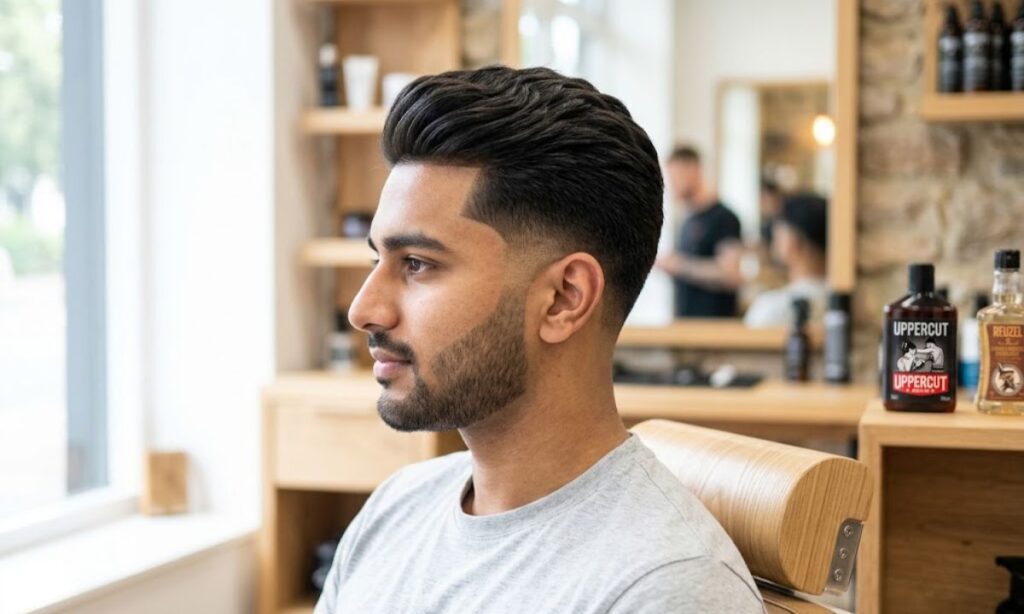
If you want a haircut that looks sharp without going overboard, low taper fade designs are the easiest way to get there. This cut keeps things clean near the ears and neckline while leaving room for a personal touch on top or along the sides. It works for almost any hair type, doesn’t demand weekly barber trips, and still gives you enough space to add a small design if you want one.
In this guide, you’ll find the 10 best low taper fade designs for men in 2026, how they’re created, how to ask your barber for one, and which products keep them looking fresh. We’ll also compare a low taper fade to a skin fade so you know which one actually fits your lifestyle.
What Is a Low Taper Fade Design?

A low taper fade design is a haircut where the fade begins close to the hairline, usually just above the ears and along the neckline, and blends gradually upward instead of dropping straight to the skin. Once that low, subtle base is in place, a barber can shave a line, shape, or pattern into the short section for extra detail.
Unlike a high or mid fade, the low taper keeps most of the head covered in hair, so the contrast stays soft. That makes it a forgiving option for work, school, or any setting where a bold cut might not be welcome.
A typical low taper fade design lasts 2 to 4 weeks before it needs a touch-up. If your hair grows quickly, that window can shrink to 10–14 days, especially with fine-line designs that lose their crispness fast.
| Factor | Low Taper Fade Design | Skin Fade Design |
| Style longevity | 2–4 weeks | 1–2 weeks |
| Skin exposure | Minimal | High |
| Maintenance frequency | Low to moderate | High |
| Best for | Office, school, everyday wear | Bold, statement looks |
| Growing-out appearance | Neat and even | Patchy near the edges |
Low Taper Fade Designs
Low Taper Fade vs. Skin Fade: Which Is Better for Designs?
Both cuts can carry a design, but they behave differently once hair starts growing back.
- A low taper fade keeps designs looking intentional for longer because the surrounding hair is already short, so regrowth blends in naturally.
- A skin fade creates sharper contrast, which makes fine lines and shapes stand out more clearly against bare skin.
- If you’re new to shaved designs, a low taper fade is the safer starting point since it grows out evenly and doesn’t demand constant upkeep.
- If you want maximum visual impact and don’t mind visiting the barber every one to two weeks, a skin fade design is the stronger choice.
10 Best Low Taper Fade Designs for Men

Here are the ten most requested low taper fade designs right now, grouped by where the design sits and how bold the pattern is.
Low Taper with Long Hair on Top

This design pairs a tight, low fade with noticeably longer hair on top, giving you room to style a quiff, comb-over, or messy fringe. The short sides do the heavy lifting while the top stays flexible for daily styling changes.
Low Taper Fade with Straight Hair

Straight hair can look flat if it’s all cut to one length. Adding a low taper fade to the sides gives the cut shape and contrast, making the top look fuller and more deliberate instead of just hanging down.
Back Low Taper Fade Designs

The back of the head is a large, flat canvas, which makes it ideal for bigger patterns. Popular choices include:
- Curved line design – a single sweeping line following the head’s natural shape
- Geometric block pattern – squares or triangles shaved into the short section
- Double-line part – two thin parallel lines for a subtle, sporty detail
Side Low Taper Fade Designs

Side placements are smaller and more discreet, often just above the ear. A single thin line or a small shape here adds character without dominating the whole haircut.
Freestyle Low Taper Fade Designs

Freestyle designs skip symmetry entirely. Barbers use lightning bolts, stars, initials, or abstract shapes to create a one-of-a-kind look. This option works best if you already have a barber you trust with detail work.
Edgar Cut with Low Taper Fade Designs

The Edgar cut features a straight, blunt fringe across the forehead paired with a low taper fade and a thin side line. This combination has become especially popular among younger men who want a structured, boxy fringe with just a hint of edge.
Small & Subtle Low Taper Fade Designs

Not every design needs to be bold. A single fine line or a tiny notch near the temple adds detail while still looking professional enough for work or formal settings.
Low Taper Fade Designs by Hair Type
Hair texture changes how a design holds up and how often it needs maintenance.
| Hair Type | Best Design Approach | Maintenance Tip |
| Curly | Heavier blend around the fade line | Trim every 2–3 weeks to keep curls tidy |
| Straight | Sharp contrast lines with textured top | Touch up every 2 weeks since growth shows fast |
| Wavy | Soft curved lines that follow natural movement | Use sea salt spray to enhance texture |
| Afro-textured | Bold geometric patterns on a rounded canvas | Moisturize scalp to keep lines crisp longer |
Low Taper Fade Designs for Curly Hair

Curly hair pairs well with a heavier blend near the fade line since curls naturally add volume on top. Designs stay visible longer here because curls don’t flatten the short sides.
Low Taper Fade Designs for Straight Hair

Straight hair shows growth quickly, so fine-line designs need touch-ups roughly every two weeks. Sharper contrast lines tend to hold their shape better on this hair type.
Trending Haircuts
Low Taper Fade Designs for Wavy Hair

Wavy hair looks best with soft, curved design lines that mirror the hair’s natural movement instead of harsh geometric shapes. A light sea salt spray also helps define the waves on top.
Low Taper Fade Designs for Afro-Textured Hair

Afro-textured hair offers a rounder, fuller canvas, which makes bold geometric or freestyle patterns stand out more. Regular scalp moisturizing helps keep design lines sharp between trims.
How Are Low Taper Fade Designs Created? (Step-by-Step)
- Consultation – The barber checks your hair type, growth pattern, and desired design placement.
- Base fade – Clippers start with a #0.5 or #1 guard just above the ears and neckline, blending upward without touching bare skin.
- Blending – The barber works the clipper over guard sizes to smooth the transition between the short sides and longer top.
- Design placement – Using clipper-over-comb or a trimmer with no guard, the barber outlines the chosen line, shape, or pattern.
- Detailing – Fine edges are cleaned up with a straight razor or detail trimmer for crisp lines.
- Styling – The top is cut, textured, and styled to complement the design below.
How to Ask Your Barber for a Low Taper Fade Design?

- Bring a clear reference photo instead of describing it from memory.
- Specify where you want the fade to start (just above the ears, low on the neckline).
- Mention the exact design placement — back, side, or a small detail near the temple.
- Ask for a low taper rather than a mid or high fade if you want minimal skin exposure.
- Request a lighter guard size if you plan to keep the design visible for several weeks.
Best Styling Products for Low Taper Fade Designs
| Product | Best For |
| Matte clay | Textured, messy tops with natural hold |
| Light pomade | Slick backs, side parts, classic looks |
| Curl cream | Curly or coily hair on top |
| Sea salt spray | Wavy, beachy texture |
| Thickening powder | Fine or thin hair that needs volume |
Applying the product to damp hair, then blow-drying with fingers or a round brush, usually takes just two to five minutes and keeps both the top style and the fade design looking sharp all day.
Frequently Asked Questions
How long does a low taper fade design last?
A low taper fade design typically lasts 2 to 4 weeks, though fast hair growth can shorten that to about 10–14 days.
Is a low taper fade design good for straight hair?
Yes, straight hair holds a low taper fade design well, though it may need touch-ups every two weeks since regrowth shows quickly.
Can I get a low taper fade design with curly hair?
Absolutely — curly hair works especially well with a heavier blend near the fade line and holds designs longer than straight hair.
What’s the difference between a low fade and a mid taper fade?
A low fade starts near the ears and neckline, while a mid taper fade begins higher up, closer to the temple, for slightly more contrast.
Is a low taper fade design professional enough for work?
Yes, since the fade stays subtle and covers most of the head, it reads as neat and appropriate for office or formal settings.
How often should I get my low taper fade design touched up?
Most men schedule a touch-up every 2 to 3 weeks to keep both the fade and the design looking clean.
Final Thoughts
Low taper fade designs give you a clean, versatile haircut with just enough room for personality. Whether you choose a subtle side line, a bold freestyle pattern, or a back design that covers the whole canvas, the key is matching the style to your hair type and how often you’re willing to visit the barber. Bring a reference photo, communicate clearly, and keep up with regular trims to enjoy a sharp, well-defined look all year round.
