
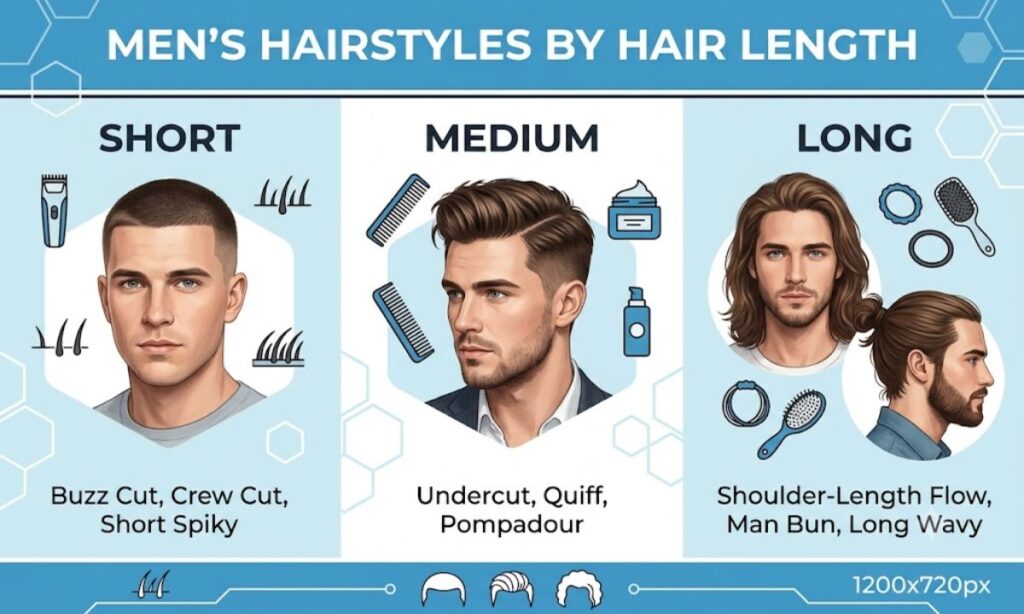
Choosing the right haircut starts with one simple fact. Your hair length controls your options. Once you know your length category, styling becomes much easier.
This guide breaks down men’s hairstyles by hair length in plain terms. You will learn what works for short, medium, and long hair. You will also learn how to talk to your barber with confidence.
Whether you want a low-maintenance buzz cut or a bold long style, this article covers it. We compare each length, list the best cuts, and answer common questions. Let’s get started.
Understanding Hair Length Categories
Men’s hair generally falls into four length groups. Barbers use these categories to recommend cuts. Knowing yours saves time in the chair.
Hair grows about half an inch every month. This means moving between categories takes patience. Use the table below as a quick reference guide.
| Length Category | Approximate Length | Best For | Maintenance Level |
| Short Hair | 0.5–2 inches | Professional settings, active lifestyles | Low to Medium |
| Medium-Short Hair | 2–4 inches | Everyday versatility | Medium |
| Medium Hair | 4–6 inches | Textured, stylish looks | Medium to High |
| Long Hair | 6+ inches | Bold, expressive styles | High |
Why Hair Length Matters for Style Choice
Length affects more than looks. It changes how much time you spend styling each morning. It also affects how often you need a trim.
Thicker hair holds length better than fine hair. Fine hair can look flat past medium length. Face shape also plays a role in what suits you best.
Short Hair (0.5–2 inches): Precision and Polish
Short hair is the most popular choice among men today. It suits busy schedules and formal workplaces. It also pairs well with fades and clean lines.
Short styles need frequent trims to stay sharp. Most men visit the barber every two to three weeks. This keeps edges crisp and shape intact.
Crew Cut

The crew cut is a timeless short style. It keeps the top slightly longer than the sides. It works with almost every hair type and face shape.
Buzz Cut
The buzz cut is the lowest-maintenance option available. Hair is trimmed to a uniform, very short length. It suits men who want a fuss-free morning routine.
Taper Fade
The taper fade blends length gradually down the sides. It creates a clean, sharp finish without harsh lines. This style suits both casual and professional settings.
Ivy League
The Ivy League is a longer take on the classic crew cut. It leaves more length on top for light styling. It offers a polished, preppy appearance.
All Read This Hair On Men’s Hairstyles by Hair Length
Medium-Short Hair (2–4 inches): Versatility Peak

Medium-short hair sits between short and medium categories. It gives more styling options than a basic crew cut. Many men consider this the most versatile length.
This length works well for straight, wavy, and curly hair types. It allows texture to show without looking unruly. A light styling product usually completes the look.
Best Styles for Straight Hair
Straight hair holds shape well at this length. A side part or textured quiff both look sharp. These styles need minimal daily upkeep.
Quiff Haircut

The quiff lifts hair up and back from the forehead. It adds height and a modern edge to any outfit. This style works across most face shapes.
Short-Length Hairstyles for Men
At the shorter end of this range, crops and textured tops dominate. These cuts are easy to maintain between barber visits. They also transition well into fades on the sides.
Medium Hair (4–6 inches): Textured and Trendy
Medium hair offers more room for creativity. It suits men who want texture without full commitment to long hair. This length flatters oval and square face shapes especially well.
Styling medium hair usually takes a bit more time. A matte paste or light pomade helps define texture. Regular trims every four to six weeks keep the shape neat.
Popular Medium-Length Styles
- Textured crop with a fade
- Side-swept style with volume
- Slicked-back classic look
- Curly or wavy natural texture
Face Shape Considerations
Oval faces suit almost any medium-length style. Round faces benefit from added height on top. Square faces look best with softer, textured edges.
Men’s Hairstyles by Face Shape and Hair Texture: The Complete Style Guide
Picking a haircut is not just about following trends. Your face shape and hair texture decide what actually looks good on you. Get these two factors right, and every style works harder for you.
This guide focuses on two things barbers check first. We cover long and rectangular faces in detail. We also break down straight, wavy, curly, and coarse hair.
By the end, you will know how to describe your ideal cut to any barber. You will also understand why some styles add character while others fall flat. Let’s break it down step by step.
How Face Shape and Hair Texture Work Together
A great haircut balances two variables at once. Face shape decides the outline you need. Hair texture decides how easily that outline holds.
Skipping one factor often leads to disappointment. A style that suits an oval face may not suit straight hair. Always consider both before booking your next appointment.
Long and Rectangular Faces: Best Hairstyles

Long and rectangular faces share one main trait. They are noticeably longer than they are wide. The goal here is to add width and reduce the appearance of extra length.
Avoid styles that add height on top. Height stretches the face further and exaggerates length. Instead, look for cuts that build volume around the sides.
Character and Movement
Movement is what separates a flat haircut from one with personality. Textured layers, soft waves, and gentle fringe pieces all add character. These details break up a long face shape naturally.
A style with visible movement draws the eye sideways instead of downward. This creates balance without needing a dramatic change. Barbers often achieve this through point cutting and layering.
- Soft, textured fringe across the forehead
- Layered sides for added width
- Slight waves left natural rather than slicked flat
Medium-Length Hairstyles for Men with Long Faces
Medium length hair works exceptionally well on long or rectangular faces. It adds volume at the sides without stacking extra height on top. This shortens the visual length of the face.
Popular medium-length choices include a side-swept style and a textured crop with length. A soft quiff, kept low rather than tall, also works well. Avoid slicking hair straight back, as this exposes the full length of the face.
| Face Shape | Recommended Length | Styles to Avoid |
| Long/Rectangular | Medium (side volume) | Tall pompadours, slicked-back styles |
| Oval | Any length | Very few restrictions |
| Square | Short to medium, textured | Very blunt, boxy cuts |
| Round | Short with height on top | Rounded, flat-top styles |
Hair Texture Considerations
Texture determines how a haircut behaves once you leave the barber chair. The same style can look completely different across texture types. Understanding your texture prevents costly styling mistakes.
Below is a breakdown of the four main hair textures. Each one responds differently to length, product, and cutting technique.
Straight Hair
Straight hair is smooth and free of natural curl or wave. It holds clean lines and sharp parts extremely well. However, it can look flat and lifeless at longer lengths without added texture.
Straight hair suits crew cuts, side parts, and textured crops. A light matte product adds grip without weighing hair down. Regular point cutting helps prevent a blunt, heavy appearance.
Wavy Hair
Wavy hair sits between straight and curly. It forms soft, natural bends that add texture without much effort. This texture is often considered the easiest to style.
Medium lengths showcase waves best, especially with tapered sides. A sea salt spray or light mousse enhances natural movement. Wavy hair adapts well to quiffs, shags, and loose, textured styles.
Curly Hair

Curly hair features defined curls or spirals with real volume. It thrives when the length on top is left longer to let curls show. Cutting curly hair dry helps barbers see the true curl pattern.
Fades and tapers on the sides work well with curly tops. Curl-specific creams or gels help define shape without frizz. Avoid cutting curly hair too short, as this can remove its natural character.
Coarse or Thick Hair
Coarse or thick hair has a dense, sturdy structure. It holds shape and volume better than fine hair types. This makes it ideal for longer styles that need body to look intentional.
Internal layering removes bulk without sacrificing the overall silhouette. Thick hair also suits retro styles like the slicked pompadour or shaggy mullet. A stronger-hold product is usually needed to manage the extra density.
| Hair Texture | Best Styling Approach | Recommended Products |
| Straight | Sharp lines, point cutting | Matte clay, light pomade |
| Wavy | Minimal styling, natural texture | Sea salt spray, light mousse |
| Curly | Longer top, dry cutting | Curl cream, defining gel |
| Coarse/Thick | Internal layering | Strong-hold pomade |
The Professional Perspective
Barbers rely on a consistent process during every consultation. They assess face shape, hair texture, density, and growth pattern together. This professional approach removes guesswork from the final result.
Most barbers ask about your daily styling routine before cutting. This detail changes how much layering or texture they add. Being honest about your effort level leads to a much better outcome.
Steps a professional barber typically follows:
- Assess face shape and identify areas needing balance
- Check hair texture and natural growth direction
- Ask about daily styling time and product use
- Recommend a length and technique that fits all three factors
- Discuss maintenance and trim frequency going forward
Making Your Length Decision
Choosing the right length comes down to combining everything covered above. Start with your face shape, then factor in your hair texture. Finally, consider how much time you realistically want to spend styling.
Bring reference photos to your appointment for clarity. Describe the look using length, texture, and finish rather than just a style name. This helps your barber translate the request accurately.
- Long or rectangular face: choose medium length with side volume
- Straight hair: expect sharper, cleaner lines
- Wavy or curly hair: let natural texture guide the final shape
- Low styling time: pick shorter, low-maintenance cuts
For Frequently Asked Questions
What is the best hair length for men?
Medium-short hair (2–4 inches) is the most popular choice. It balances a professional look with easy daily styling.
What hairstyle is best for short hair?
A crew cut or taper fade works best for short hair. Both stay sharp and need low daily maintenance.
How long does it take to grow hair from short to long?
It takes about 10 to 14 months to grow hair from short to long. Hair grows roughly half an inch per month.
What is the most low-maintenance men’s hairstyle?
The buzz cut is the most low-maintenance option. It needs no daily styling, just regular trims.
What length of hair is good for thick hair men?
Medium to long lengths suit thick hair best. Natural density helps hold volume and shape.
How often should men get a haircut?
Short hair needs a trim every 2–3 weeks. Medium and long hair can wait 4–10 weeks between cuts.
What hairstyle is best for a receding hairline?
Short styles like a crew cut or buzz cut work best. They reduce contrast between thinning areas and full hair.
Conclusion
Your hair length shapes every haircut decision you make. Short, medium, and long styles each offer something different. The right choice depends on your lifestyle and hair type.
Short hair suits busy schedules and formal settings well. Medium length offers the best balance of style and ease. Long hair rewards patience with bold, flexible looks.
Face shape and hair texture matter just as much as length. Thick hair holds longer styles better than fine hair. Always match your choice to what suits you naturally.
Start with a length that fits your daily routine. You can always grow it out or cut it shorter. The best hairstyle is one that makes you feel confident.
