

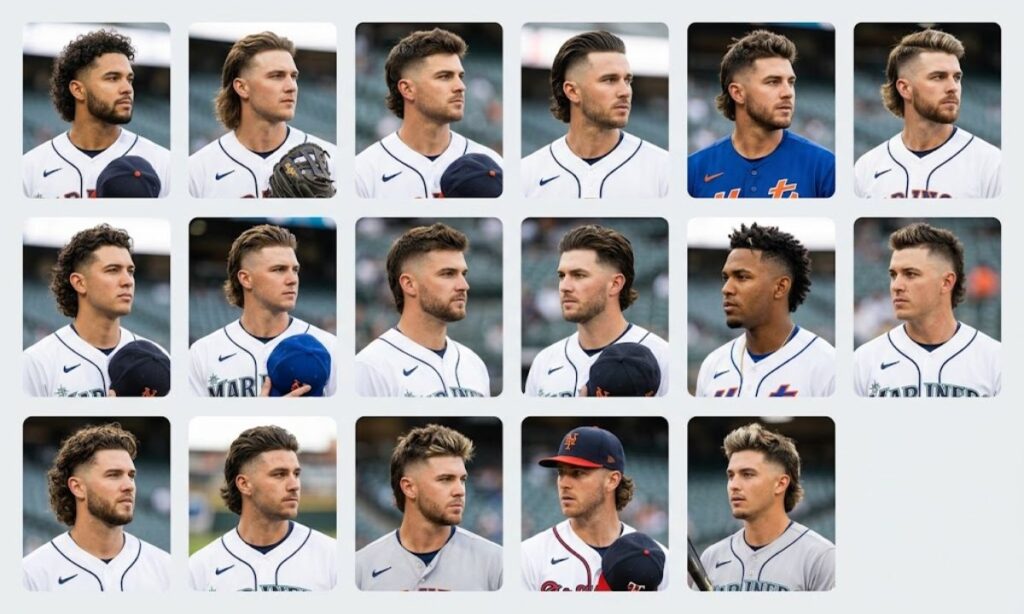
Baseball season brings more than home runs and dugout energy , it brings hair inspiration too. The mullet fade baseball haircut has quickly become one of the most requested cuts at barbershops, blending old-school mullet flow with the sharp, disciplined lines of a modern fade.
It’s rugged enough for the field, clean enough for everyday life, and flexible enough to fit almost any hair type.
If you’ve been scrolling through dugout photos or player interviews wondering how to get that exact look, this guide breaks down everything: the best styles, who they suit, how to maintain them, and the mistakes to avoid.
Key Features of Mullet Fade Baseball Haircuts

Before picking a style, it helps to understand what actually defines this haircut. A mullet fade baseball haircut typically includes:
- Short, faded sides : usually a low, mid, skin, or burst fade for a crisp finish
- Longer back section : the signature mullet “flow” that grows past the collar
- Textured or tapered top : enough length to style forward, back, or messy
- Low-maintenance structure : built to survive helmets, sweat, and long practices
- Bold contrast : sharp sides against loose, flowing back hair
This combination gives players a look that stays neat under a cap during the game but still shows personality once it comes off.
Mullet Fade Baseball
Who Should Get a Mullet Fade Baseball Haircuts?

This cut isn’t limited to professional athletes. It suits:
- Baseball and softball players who wear helmets or caps regularly
- Teenagers and young men wanting a trendy, low-effort style
- Anyone with thick, wavy, or curly hair that holds shape well
- People who want a hairstyle that transitions from sporty to casual
It works especially well for those who don’t want to commit to a full mullet but still crave the rebellious, athletic edge a fade brings.
Baseball Mullet Fade Straight Hair

Straight hair creates a sleek, controlled version of this cut. The fade sits crisp against the scalp, while the straight back section falls naturally without much styling effort.
It’s one of the easiest textures to maintain because there’s minimal flyaway or frizz, making it a favorite among players who don’t have time for daily styling.
Modern Baseball Mullet

The modern baseball mullet softens the dramatic 80s mullet shape into something wearable in 2026. It usually pairs a taper or burst fade with a textured top and a moderately long back : enough to flow, not enough to look outdated.
This version blends street style with sports grooming culture, and it’s the base template most of the styles below build on.
14 Best Mullet Fade Baseball Haircuts Styles
Here’s a breakdown of the most popular variations barbers are cutting right now.
1. Low Taper Mullet Baseball Fade

A beginner-friendly option where the taper starts gradually near the neckline and sideburns. It’s subtle, professional-looking, and works for almost every face shape.
2. Skin Fade Baseball Mullet

The sides fade all the way down to bare skin, creating maximum contrast against the longer back section. This is the boldest, sharpest version on the list.
3. Burst Fade Baseball Mullet

The fade curves around the ear in a burst pattern rather than a straight line. It gives the haircut a rounder, more dynamic shape that many players prefer for its athletic look.
4. Mid Fade Textured Mullet

A balanced choice that sits between low and high fades. Textured top layers add movement, making this a good pick for thick or wavy hair.
5. High Fade Athletic Mullet

The fade line sits higher on the head, creating a more dramatic contrast and a sportier silhouette. It’s a favorite among players who want maximum definition.
6. Curly Baseball Mullet Fade

Curls at the top and back add natural volume, while the faded sides keep the look tidy. This variation works best with regular curl-defining products.
7. Wavy Mullet Fade Baseball Cut

Waves give the mullet a relaxed, textured finish. The fade keeps things sharp while the waves add effortless character to the back and top.
8. Shaggy Baseball Mullet Fade

A looser, choppier version with uneven layers throughout. It has a laid-back, off-duty feel and pairs well with lower-maintenance fades.
9. Slick Back Baseball Mullet Fade

The top is combed straight back for a polished, retro-inspired finish, while the fade keeps the sides disciplined. This is a sharp option for game day.
10. Drop Fade Mullet Baseball Style

The fade line drops lower behind the ear, following the natural curve of the head. It adds a rounder, more sculpted appearance to the overall cut.
11. Mohawk Inspired Baseball Mullet

A daring hybrid that adds extra height and texture down the center of the top, while the fade and mullet back keep it grounded in classic mullet territory.
12. Fringe Baseball Mullet Fade

A longer front fringe falls over the forehead, contrasting with the tight fade on the sides. It’s a stylish option for those who want more length up front.
13. Short Baseball Mullet Fade

A subtler take where the back length is trimmed shorter than a traditional mullet. It’s ideal for players who want the fade contrast without a dramatic flow.
14. Long Flow Baseball Mullet Fade

The most dramatic version, with a long, flowing back section that extends well past the collar. This is the closest to a classic mullet, updated with a modern fade.
Comparison Table: Popular Mullet Fade Baseball Haircut Styles
| Style | Best For | Maintenance Level |
| Low Taper Mullet | Beginners, professionals | Low |
| Skin Fade Mullet | Bold, high-contrast looks | Medium |
| Burst Fade Mullet | Rounder face shapes | Medium |
| Curly Baseball Mullet | Curly/coily hair types | Medium-High |
| Long Flow Mullet | Dramatic, statement styles | High |
| Short Baseball Mullet | Subtle, everyday wear | Low |
Inspired by Players
Styling Tips for Mullet Fade Baseball Haircuts

- Use a light pomade or texturizing paste for definition without stiffness
- Blow-dry the top slightly upward for volume before applying product
- Keep the back section combed downward to maintain the mullet shape
- Avoid over-styling the fade; it should stay crisp and low-effort
- Reapply a small amount of product after removing a helmet or cap
Maintenance Guide
| Task | Recommended Frequency |
| Fade touch-up | Every 2–3 weeks |
| Back/length trim | Every 6–8 weeks |
| Deep conditioning | Weekly |
| Product application | Daily |
Regular fade touch-ups matter most here — a grown-out fade quickly ruins the sharp contrast that makes this haircut work.
Best Face Shapes for This Haircut

- Oval faces / nearly every variation suits this shape
- Square faces / softer, textured tops balance strong jawlines
- Round faces / higher fades and added height create length
- Diamond faces / fringe or textured styles soften angular features
Best Hair Types
- Straight hair / clean, low-maintenance results
- Wavy hair / natural texture enhances the mullet flow
- Curly hair / adds volume but needs consistent product use
- Thick hair / holds fade lines and shape exceptionally well
Common Mistakes to Avoid

- Letting the fade grow out unevenly between barber visits
- Choosing too dramatic a mullet length for a formal workplace
- Skipping regular trims on the back section, causing split ends
- Using heavy products that weigh down fine or thin hair
- Not communicating the exact fade height clearly to your barber
Professional Barber Advice
Barbers generally recommend bringing a reference photo to your appointment, since fade height and mullet length can vary significantly between interpretations. It also helps to be upfront about your lifestyle — players who wear helmets daily may want a slightly shorter top to reduce hat-hair, while those with more flexibility can go for longer, flowing back sections.
Frequently Asked Questions
Is a mullet fade good for baseball players?
Yes, it keeps hair short and neat under helmets while allowing a stylish, longer back section for off-field looks.
How often should I get my fade touched up?
Most barbers recommend a touch-up every 2–3 weeks to keep the fade sharp and clean.
Does a mullet fade suit curly hair?
Yes, curly hair adds natural volume, though it requires consistent product use to keep the shape defined.
What’s the difference between a burst fade and a skin fade mullet?
A burst fade curves around the ear for a rounded look, while a skin fade blends straight down to bare skin for maximum contrast.
Can I get a mullet fade for a professional job?
Yes, opting for a low taper or short baseball mullet fade keeps the style subtle enough for most workplaces.
Conclusion
The mullet fade baseball haircut has earned its spot as one of the standout men’s hairstyles of 2026 because it balances discipline and freedom in a single cut. Whether you prefer a bold skin fade, a shaggy textured top, or a dramatic long flow, there’s a variation on this list suited to your hair type, face shape, and lifestyle.
Bring a clear reference to your next barber appointment, stay consistent with touch-ups, and this cut will carry you confidently from the dugout to everyday life.
