

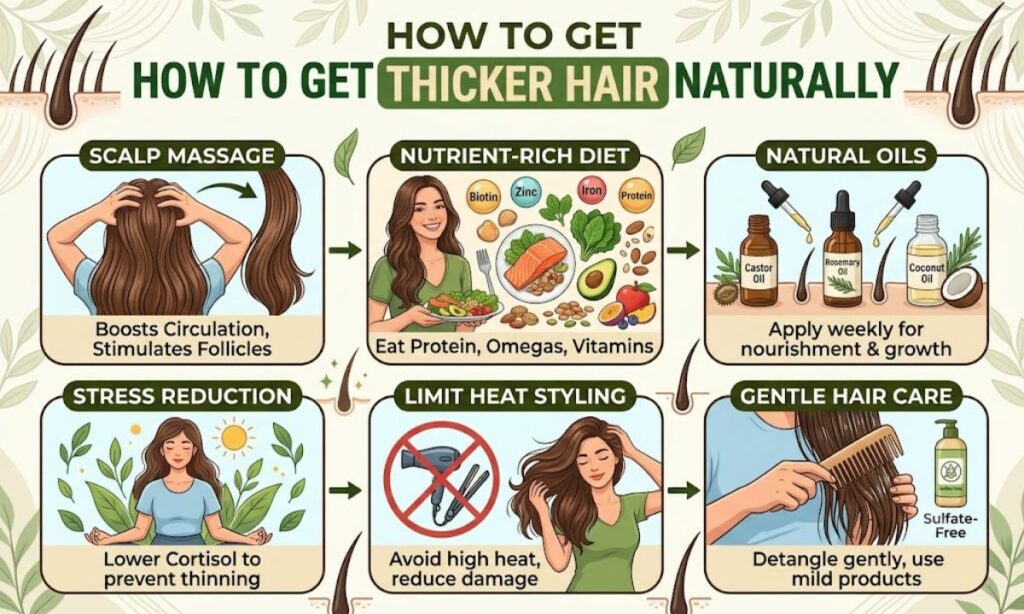
Thin, limp hair can knock your confidence, but here’s the good news: in most cases, you don’t need expensive treatments to see real improvement. With the right diet, scalp care, and daily habits, you can encourage your hair to look and feel noticeably thicker within weeks.
This guide breaks down exactly why hair thins out, what actually works to reverse it, and how men and women can build a simple routine that supports fuller, healthier strands for the long term.
Getting to the Root of Thinning Hair
Before jumping into solutions, it helps to understand what “thick hair” really means. Hair thickness isn’t just about how much hair you have — it’s a combination of:
- Hair density — the number of strands per square inch of scalp
- Strand diameter — how wide each individual hair is
- Hair health — how strong, hydrated, and damage-free your strands are
Someone can have a lot of hair that still looks thin if each strand is fine or damaged. Likewise, fewer strands with a thicker diameter can look fuller. That’s why the best approach targets both scalp health and strand quality at the same time.
What Causes Thin or Fine Hair
Hair thinning is rarely caused by just one thing. Common culprits include:
- Genetics — your natural hair density and strand thickness are largely inherited.
- Ageing — hair follicles gradually shrink over time, producing finer strands.
- Nutritional deficiencies — low protein, iron, biotin, or vitamin D intake can weaken hair.
- Hormonal changes — pregnancy, menopause, and thyroid issues often trigger shedding.
- Stress — chronic stress can push hair follicles into a resting (shedding) phase.
- Heat and chemical damage — frequent bleaching, coloring, and styling weaken the hair shaft.
- Poor scalp health — buildup, dandruff, or reduced blood flow can slow healthy growth.
It’s normal to shed 100–150 hairs a day. If you’re noticing significantly more than that, or you can see more scalp than usual, it’s worth checking in with a doctor or dermatologist to rule out an underlying condition.
How to Make Hair Thicker and Fuller Naturally

The most effective strategy combines internal care (diet and supplements) with external care (scalp treatments and gentler styling). Here’s how to approach both.
Natural Ways to Get Thicker Hair
1. Eat a hair-friendly diet
Your hair is built from protein, so what you eat matters more than most people realize. Focus on:
| Nutrient | Why It Helps | Food Sources |
| Protein | Hair is made mostly of keratin protein | Eggs, chicken, lentils, beans |
| Omega-3 fatty acids | Nourishes follicles and scalp | Salmon, walnuts, flaxseed |
| Vitamin C | Boosts collagen and shine | Oranges, berries, bell peppers |
| Iron | Supports oxygen delivery to follicles | Spinach, red meat, chickpeas |
| Biotin | Supports keratin production | Eggs, nuts, sweet potatoes |
| Zinc | Supports tissue growth and repair | Pumpkin seeds, shellfish |
2. Massage your scalp regularly
Scalp massage is one of the most well-supported natural methods for encouraging thicker hair. Gently massaging the scalp with your fingertips in small circles for 5–10 minutes a day may increase blood flow to the follicles and even stretch the hair follicle itself, allowing thicker strands to grow over time.
3. Try natural oils and masks
- Coconut oil — penetrates the hair shaft and reduces protein loss
- Onion juice — some studies link it to improved hair growth
- Aloe vera — soothes the scalp and reduces buildup
- Egg masks — provide protein directly to the hair
4. Be gentle with your hair
Reducing daily damage protects the thickness you already have. Try to limit:
- Frequent bleaching or coloring
- High-heat styling tools
- Tight hairstyles that pull on the scalp
- Rough towel-drying
5. Use volumizing hair care products
Sulfate-free, volumizing shampoos and conditioners with ingredients like biotin, keratin, or hyaluronic acid can plump up each strand and add the appearance of fullness without weighing hair down.
6. Protect hair from sun and environmental damage
UV exposure can break down the protein bonds in your hair shaft, leading to weaker, thinner-looking strands. A hat or leave-in UV protectant can help during long days outdoors.
All Also Read This Hair On How to Get Thicker Hair Naturally
Can You Regrow Hair Naturally in 3 Weeks?
It’s a common search, but it’s worth setting realistic expectations here. The hair growth cycle typically spans months, not weeks, so most natural remedies need 8–12 weeks minimum before visible results appear. What you can achieve in about three weeks is:
- Reduced shedding from better scalp care
- Less breakage from gentler styling
- A visibly healthier-looking scalp
Real density changes take longer, but starting early and staying consistent is what makes the biggest difference.
Hair Care Tips for Men and Women

While the core principles overlap, men and women often deal with different patterns of thinning.
For Women
- Hormonal shifts (postpartum, menopause) are common thinning triggers — a dermatologist can help identify the cause
- Avoid overly tight ponytails or braids that stress the hairline
- Volumizing mousses, root-lifting sprays, and layered haircuts can add instant visual fullness
- Consider a hyaluronic acid or biotin-infused shampoo for added strand thickness
For Men
- Genetic pattern thinning (androgenetic alopecia) is the most common cause in men
- A shorter, textured cut can make thinning less noticeable while it’s being addressed
- Scalp massage tools and thickening shampoos work well alongside a consistent grooming routine
- Early intervention gives the best results, so don’t wait until thinning is advanced
Scientifically Proven Ways to Grow Thicker Hair
Beyond home remedies, a few methods have stronger research backing:
- Scalp massage — supported by small clinical studies showing increased hair thickness over time
- Balanced nutrition — deficiencies in iron, protein, and vitamin D are directly linked to hair thinning in research
- Reducing heat/chemical damage — protects the hair shaft’s structural integrity, which is well documented
- Low-Level Laser Therapy (LLLT) — clinically studied and shown to stimulate follicles and improve density in both men and women
Low-Level Laser Therapy (LLLT)
LLLT uses red light wavelengths to stimulate blood flow and cellular activity in hair follicles. It’s a non-invasive, FDA-cleared option often used alongside natural methods for people who want an extra boost. Devices range from in-clinic treatments to at-home laser caps, and results are typically seen after consistent use over several months.
Natural Home Remedies: Quick Reference Table
| Remedy | How to Use | Frequency |
| Coconut oil | Massage into scalp, leave 30 min, then wash | 2–3x per week |
| Onion juice | Apply to scalp, leave 5 minutes, rinse | 1–2x per week |
| Egg mask | Mix egg yolk, olive oil, water; apply to hair | Weekly |
| Aloe vera gel | Apply directly to scalp | 2–3x per week |
| Scalp massage | Fingertip circles, 5–10 minutes | Daily |
Professional Hair Thickening Treatments

If natural methods aren’t giving you the results you want, clinics such as Darling Downs Hair Transplant Clinic offer professional options, including:
- PRP (Platelet-Rich Plasma) therapy — uses your own blood platelets to stimulate follicles
- Low-Level Laser Therapy (LLLT) — in-clinic laser sessions for follicle stimulation
- Hair transplant procedures — for more advanced or permanent thinning
- Medical consultations — to identify underlying hormonal or nutritional causes
A consultation can help determine whether natural remedies alone will be enough or if a combined approach makes more sense for your situation.
Conclusion
Thicker hair isn’t about one miracle product — it’s about consistency. Nourish your body from the inside with the right nutrients, care for your scalp daily, and protect your strands from unnecessary damage. Combine these natural habits with patience, and for more stubborn cases, don’t hesitate to explore professional treatments like PRP or LLLT. Your hair goals are closer than you think.
I wasn’t able to save this as a downloadable file due to a tool error on my end — if you’d like, just say so and I’ll try creating the file again.
Frequently Asked Questions
Can thin hair become thick again naturally?
Yes, in many cases. Improving diet, scalp health, and reducing damage can restore some thickness, though genetic thinning may need professional treatment for full results.
How long does it take to see thicker hair naturally?
Most people notice reduced shedding within a few weeks, but visible density changes usually take 3 to 6 months of consistent care.
Does scalp massage really work for thicker hair?
Yes, research suggests scalp massage improves blood flow and may stretch the follicle, encouraging thicker strand growth over time.
What foods make hair thicker?
Protein-rich foods, omega-3 fatty acids, iron, biotin, and vitamin C all support stronger, fuller-looking hair.
Is onion juice good for hair thickness?
Some studies show onion juice may improve hair growth in cases of hair loss, though more research is needed to confirm its full effectiveness.
Can men reverse thinning hair naturally?
Natural methods can slow further thinning and improve hair health, but genetic pattern baldness in men often requires medical or professional treatment for significant regrowth.
What is the fastest way to make hair look thicker?
Volumizing shampoo, root-lifting products, and a well-suited haircut can create an instant thicker appearance while long-term remedies work in the background.
